
How good are queer movies? This year my Melbourne Queer Film Festival viewing was a mixed bag of excellent, inoffensive, and one that I’m still not sure quite how to describe. I cringed, laughed, winced, hooted; was entertained, terrified, and provoked. Without further ado, here are five films to add to your watchlist (or not!).
Passages directed by Ira Sachs
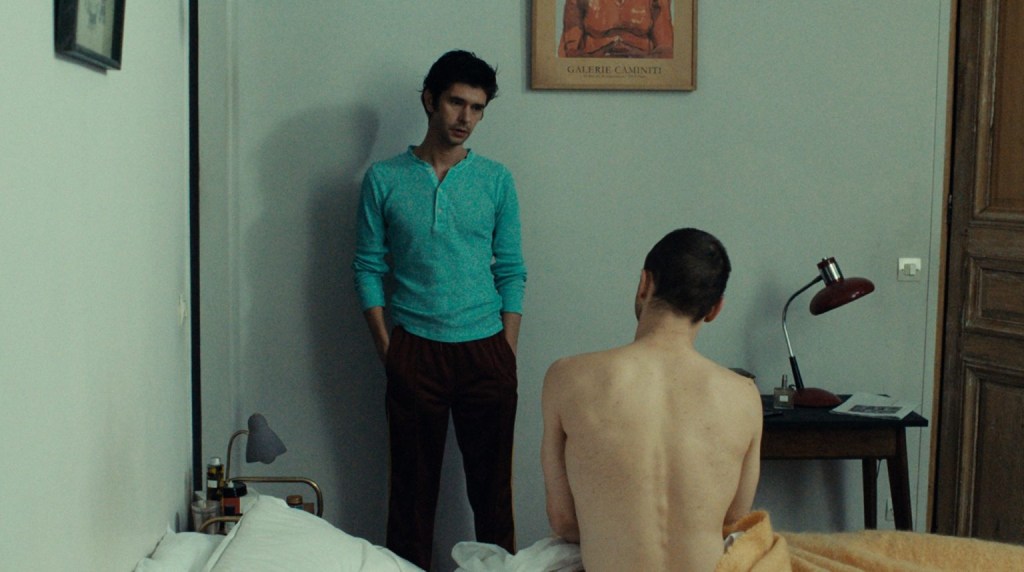
There seems to be a rule in cinema and TV that any bisexual must be traitorous, promiscuous and unable to commit to any gender. Sure, it’s nice to see an increase well-rounded, wholesome bi characters like Nick in Heartstopper, but I couldn’t help but cheer for Passages’ wholehearted championing of the much-maligned evil bisexual. This biting, gorgeous film from Ira Sachs spends most of its time bouncing back and forth between Martin (Ben Whishaw) and Agathe (Adèle Exarchopoulos) the husband and lover respectively of film director Tomas (Franz Rogowski). In the screening I watched, the audience was gasping and hooting like tennis spectators as the three characters get into progressively more awkward and tense situations. Impeccably and meticulously crafted, acted and styled, and with boundary-pushing sex scenes, this is my pick of the festival.
The Mattachine Family directed by Andrew Vallentine

Photographer Thomas (Nico Tortorella) and former child star husband Oscar (Juan Pablo Di Pace) are recovering after their foster son Arthur is returned to his birth mother, in this sincere take on the big queer questions of life. While Oscar is away filming, Thomas contemplates whether children are something he must have in his life. Pleasantly filmed in the hilly suburbs of Los Angeles, and with a typically amusing supporting act in Thomas’s friend Leah (Emily Hampshire) The Mattachine Family is novel and specific if rather inoffensive.
Birder directed by Nate Dushku

Imagine Stranger By The Lake minus acting, writing, cinematography and directing … and you might get close to the experience of Birder. Kristian with a K (Michael Emery) is a lone camper making his way through the back country of New Hampshire when he comes across the queer nudist camp, overseen by the extremely unprofessional ranger Delilah. Kristian meets his fellow happy campers, takes mushrooms and hooks up with several (most) of the them and then starts killing them off. Will he be caught? What happens when he runs out of the victims? What is this film? Birder is barely interested in the answers, and coasts from sex-murder scene to sex-murder scene on the kind of stilted dialogue one finds in the worst (or best, depending on your requirements) mainstream porn. Even the festival programmer read us for filth for packing out an audience for this in favour of so many other fine films. It’s so bad it almost, as my partner noted, approaches surrealist art, but as we all know, a bad film can mean a fantastic time in the cinema.
Femme directed by Sam H. Freeman and Ng Choon Ping

Drag queen Jules (Nathan Stewart-Jarrett) goes out for smokes one night after a performance and is beaten to within an inch of life in this slick and glamorous London drama. Later she meets her perpetrator, the deeply closeted Preston (George MacKay) at a sauna while out of drag, and conceives of revenge that depends on getting extremely intimate with him. Femme ratchets up the tension in a series of nail-biting encounters as Jules learns more about Preston while concealing his identity. Erotic, surprisingly funny, and possibly even a bit romantic, Femme juggles its conflicting tones faultlessly, becoming a provocative exploration of justice, forgiveness and gender expression.
Sunflower directed by Gabriel Carrubba

A summery Melbourne coming out story, Sunflower follows Berwick teenager Leo (Liam Mollica) as he discovers he’s gay and makes his first forays with boys. Opening with him being beaten up by a gang of thugs on a basketball court (led by Elias Anton, the star of Sunflower’s most recent queer predecessor Of An Age), the film loops back to show Leo’s life with his friends like Boof. They’re typical teenage boys, obsessed with sex and girls and gays (as in not being one), with the homoerotic overtones that usually implies. Leo’s parents provide some light relief, but also a reality check (as uncomfortable as the overt violence towards Leo at school is, it’s the ignorant words at home that really sting). Later Leo meets Tom (Daniel Halmarick), who provides romantic hope, symbolised by the field of sunflowers of the title. That imagery may be a little overused and undercooked, but overall this is a pleasant, earnest entry into Melbourne’s queer film canon.
Discover more from The Library Is Open
Subscribe to get the latest posts sent to your email.
 The Library Is Open