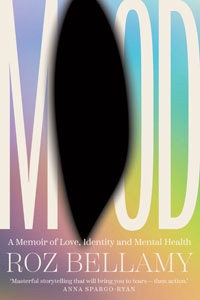
In this vital memoir Roz Bellamy recounts their coming to terms with mental illness and mood disorder. It begins in 2016 as Roz starts teaching at a public high school in Melbourne after years of study and training. While facing new job jitters and excitement, the experience is also fraught with anti-Semitism and inadequate support. Some of the students draw swastikas on desks and saying that Hitler “should have killed all of them”. Meanwhile Roz’s mental health worsens. “I’m losing a sense of control,” they write. In the frightening passage that opens the book, Roz finds themselves driving into the city with little idea of where they’re going or how they got there.
Through the lens of the school year, Roz casts their eye back to their childhood, youth and adolescence, on growing up Jewish and facing prejudice at work, discovering their sexuality and meeting their wife Rachel through a fan forum for iconic queer Buffy couple Willow and Tara. They also recount trauma they’ve experienced, particularly being bullied in primary school. Teaching, they write:
is already a form of exposure therapy: a way of forcing myself to cope with my traumas and triggers. By going to therapy, as well as being a high school teacher, I’m making myself reckon with the past in two very different but equally painful ways.
They recount their life with mental illness, both the oscillations between moods and the pain and frustration of trying to find a therapist who is right for them. They describe episodes of mania and the periods of depression, and the realisation that they may have a mood disorder. Their therapists’ advice is often contradictory. One psychologist tells them, “let’s not go down the bipolar road unless we have to”; another two psychiatrists perfunctorily diagnose them with borderline personality disorder. It takes a long time for Roz to find the help that is right for them, and although diagnosis and medication eventually proves useful for them they warn that “this is not an ode to Big Pharma, psychiatry and psychotherapy. It’s an acknowledgement of my brain chemistry, my DNA and my history.”
One of the joys of Mood is that it is never one thing, allowing space for joy and celebration alongside hardship and trauma. Exploring a life through the concept of mood beyond a diagnosis proves to be rich ground. Mood is so often treated in gendered ways, so on the one hand it serves as an act of reclamation. On the other, it resists the pathologisation and medicalisation that is endemic in healthcare, gesturing at more inclusive, community-centred care. Roz’s description of mental illness is wonderfully frank, serving as an example of a way to practice curiosity, vulnerability and honesty, a way of reckoning with the past, without proscribing the same for everyone. At times they are clear about boundaries, avoiding incidents that are not their own story and may continue to harm people around them.
Two years later finds Roz diagnosed with bipolar and borderline personality disorder, managing their mental health with medication and therapy, coming out as non-binary, and leaving teaching to embrace writing. But even as Mood is a often search for definition and solidity, it increasingly becomes an embrace of the uncertain. “I mostly live in the in-between,” Roz writes of their moods, but it could equally apply to the new ways of living they are discovering, casting off the institutional treatment of mental illness and disability and searching for something kinder and more just.
Gay rating: 4/5 for queer themes and relationships.
Discover more from The Library Is Open
Subscribe to get the latest posts sent to your email.
 The Library Is Open