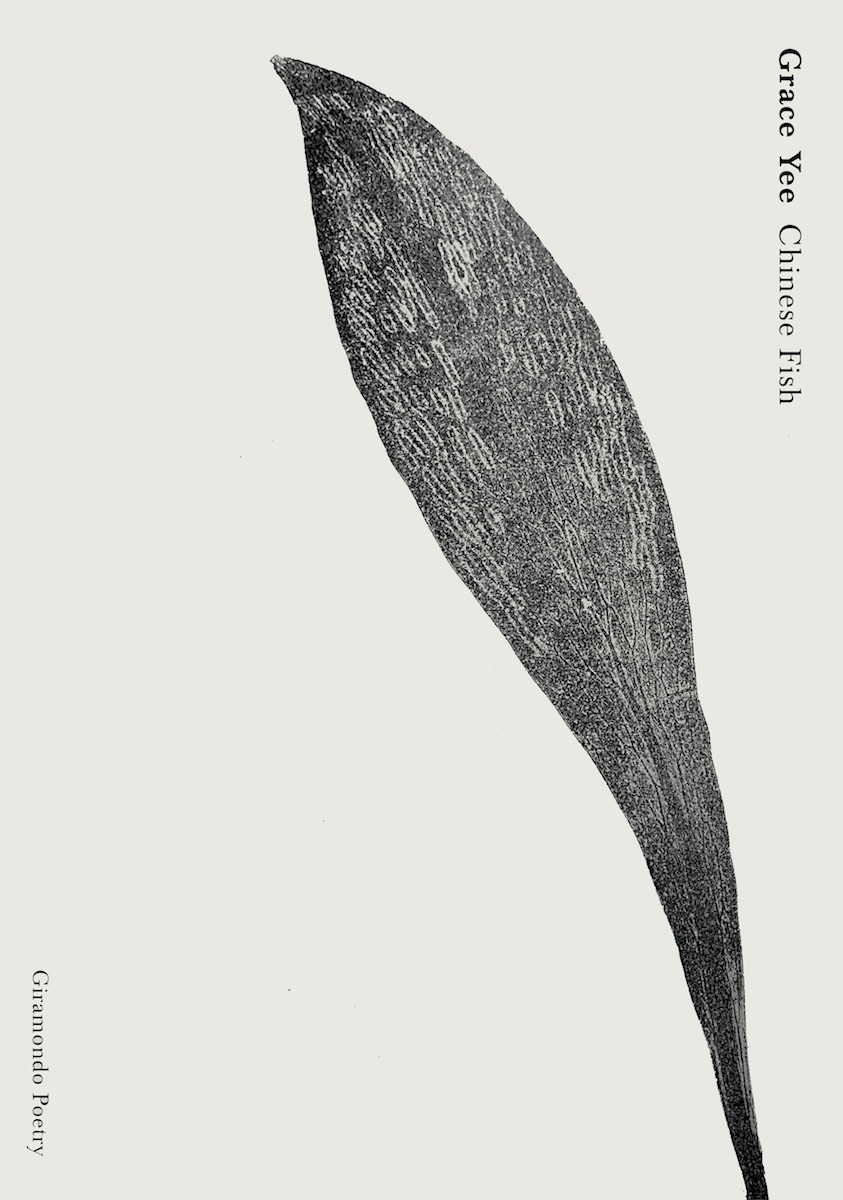
Chinese Fish is the account of the family Chin who migrates from Guangdong to Aotearoa New Zealand, or New Gold Mountain as it is titled in Hoisan-wa. We are first introduced to the members of the family, a dramatis personae. Yee orients us in the family tree but includes telling details like great-grandfather who first went to Aotearoa in 1921, where he worked for the pākehā (white New Zealanders) and “starched their their whites and bleached the shit out of their underwear long after their were no more nuggets to be found in the riverbeds”. Number Two Son Stan is “an avid consumer of Whittaker’s peanut slabs”, his wife Ping has a “face like a [BBQ pork bun]”, a seemingly endearing detail that takes on more complicated meanings.
It is Ping and her first daughter Cherry that the collection coheres around. In the first sequence, Happy Valley, we meet the family in 1963 Hong Kong, where Ping is giving birth, “the doctor stings the mother and slices her open … the room is silent, the air ceramic”. This introduces the collection’s delicate, three-voice counterpoint. These voices are distinct and puzzling, challenging and complicating the relationship between narrator and narrative, further brought into question by the relationship between Yee, poet and curator, and her characters.
So first we receive the over-the-shoulder narrative of someone within the family, possibly Cherry herself, a witness and protagonist in the joys and agonies of family life. This poses as a kind of objectivity (doubly undermined later in the collection as Cherry intrudes into her own narrative), but the perspective elides as much as it tells. Then, the unmediated vernacular of Ping speaking in English, “see my everything/so embarass!”, rendered in free verse. Finally, an anthropological gaze, often quoting directly from law and policy, and the kinds of things a white person might actually say to a Chinese person, explaining culture back to them like “the Chinese mother … must not/wash her hair or bathe”. Yee frames some poems with her own thesis on Chinese women’s storytelling, and includes other found texts like advertisements. The result is a playful collage of the quotidian and extraordinary, growing in potency and fruitfulness as the collection progresses.
In Paradise we see Ping meeting the neighbours in Ōtautahi Christchurch, explaining to her unfamiliar terms, “‘this is a tea towel, a Steelo, a jersey — JER-ZEE'”, while thinking how the Chinese women “look charming/in their little native blouses”. Ping, willfully or ironically ignoring this patronising context, simply says “Missus M very/kindlady”. Ping is mocked for her English, mostly within her family, but in rendering her voice directly Yee restores her presence in its humour (on sandwiches: “how can/feel full?/how?”), despair and cruelty.
Ping is a woman who rails against her fortune, as wife, mother, migrant, worker in the fish and chip shop that the family runs. When Cherry is born, there is the lingering disappointment that she is a girl, but, her grandmother counters, “lucky because you are/girl have to be quiet/gentle you know”. Yee untangles these gendered faultlines that run through the family, and the love and resentment that simmer away between mother and daughter, between siblings, in-laws, husband and wife.
Yee reveals the way words shape and bolster the racist, colonial inequity between pākehā and Chinese migrants. It’s insidious, present in the bare bones of the grammar whether the “they” used by pākehā to speak about Chinese migrants, or the noun-ing of an adjective as in “five Chinese”. Equally insidious, the words used to construct the racist policies like the quotas on entry for Chinese women, or restricting Chinese visitors to 72-hour visas, the searches of Chinese businesses under drugs and opium laws, or the fines dolled out to migrants gardening on Sundays to make some extra income despite being unable to access the state pension. Chinese Fish exposes such indignities and injustices, but writes back against them.
Gay rating: not gay.
Discover more from The Library Is Open
Subscribe to get the latest posts sent to your email.
 The Library Is Open