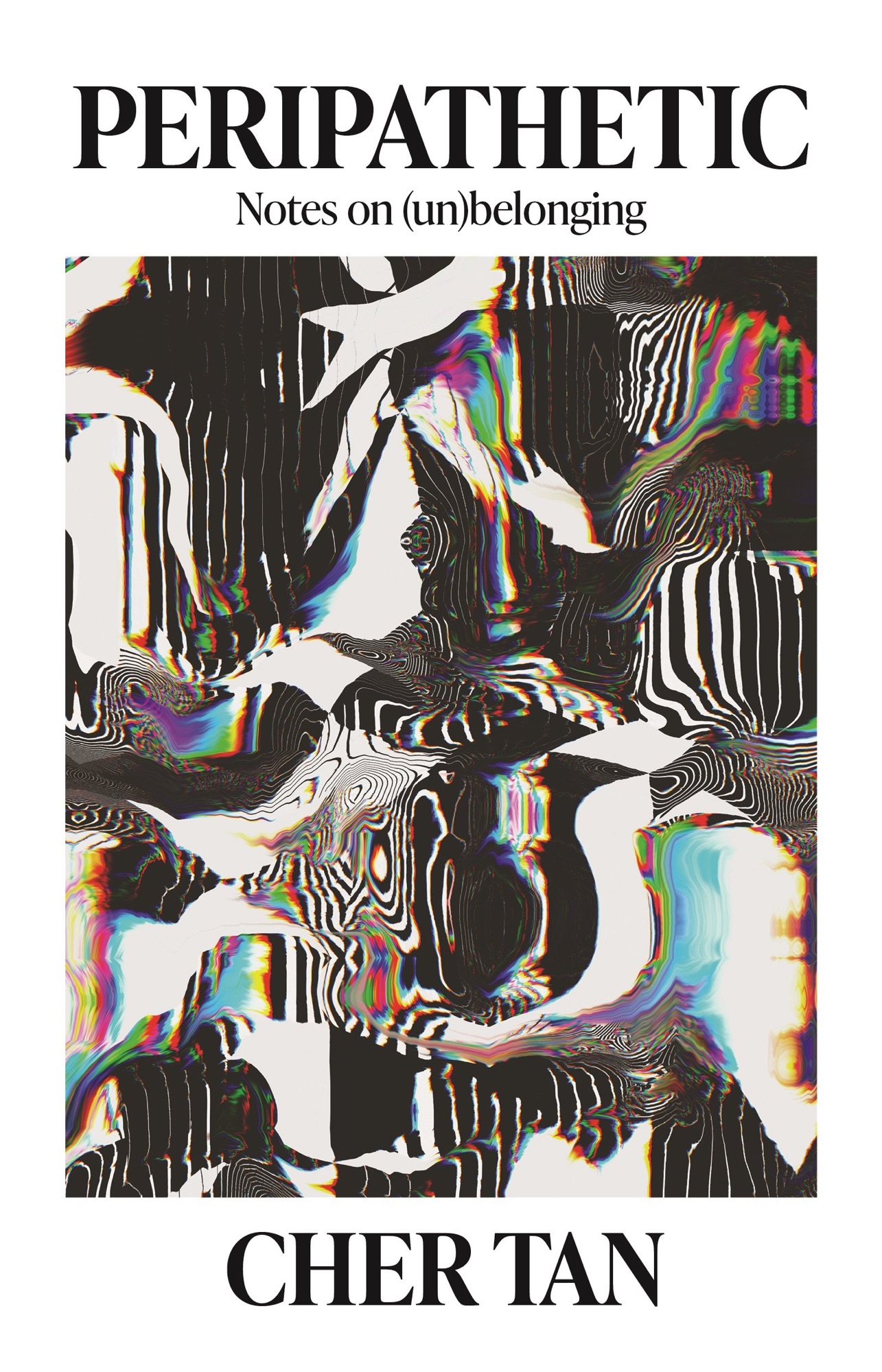
So much of the chat around The Internet is about whether it is Good or Bad, whether it’s going to free or kill us all. That’s an important question, but first we need to know what it does and what it means, questions which are much more complicated. Cher Tan is an archivist, a historian, a scribe of this pointy end of the convergence of neoliberalism and the internet in the first decades of the 21st Century. These erudite “notes”, subtitled “on (un)belonging”, blend theory and memoir to document the experience of finding community online only to have it become strange and exploitative, as the tools that once seemed to promise liberation are co-opted to maintain the status quo, or better still, turbocharge it.
The internet once seemed to be — still can seem to be, sometimes — a utopian project, offering the democratisation of information and the tools to freely realise selfhood. But it was also always the product of particular geopolitics and economics, and increasingly captured by the impulses of neoliberalism — a process Tan conceives of (citing others) as gentrification, the taming and enclosing of possibility.
It has always been material, despite the 1s and 0s that render reality abstract. Tan’s project is to investigate the particular materialities that shape life in the digital age. Beginning with Is This Real?, Tan wonders at the “unrealness of our current reality”, where it is possible for people to be one thing online and another IRL. But, as Tan shows, hasn’t it always been thus? There have always been tricksters, like writer W. G. Sebald who fabricated parts of his life, hoaxes of identity, frauds, people who play with the questions of authenticity and persona.
In Lingua Franca, she considers how netspeak, the written language of the internet, has wired her mind, alongside the other languages she uses, those that are the product of colonial histories in Singapore (a place she titles the “old country”) and Australia. In Who’s Your Normie? she considers the performances of normality and weirdness:
For years I desperately wanted to be normal. The effortless gait some people use to waltz around the world, the ease in which they relate to others, the syrupy way in which language tumbles out of their mouths like molten lava, the respect they gain from others just by being themselves. The normal things they say that go unquestioned, the weird things they utter that get irrepressibly accepted as normal. ‘All the world’s a stage’, of course, but some actors are better than others.
Speed Tests documents finding community in the era of The Pirate Bay, trading underground music peer-to-peer. The Lifestyle Church, the longest essay here, is about her experiences in the punk scene Singapore and beyond, and her ultimate disenchantment. When she migrates to Australia she finds that “here I could say anything I wanted and not feel fear” but “resistance was somehow even more of a lifestyle … it seemed for some to be merely an identity and nothing more”. Everything curdles in this time when consumption is our defining way of relating to the world and to each other.
In Influenza, Tan finds strange the public performance demanded of writers and art-makers, which rewards ‘fast-thinking’, which the French sociologist Pierre Bourdieu called “cultural ‘fast food'”. You are your brand. “If it was impossible to own anything,” Tan writes, “then I might as well sell everything”. Most notably in Shit Jobs, a diary of sorts of all the jobs Tan has worked in the effort to “find a way to live on this continent [Australia] as a non-tertiary-educated immigrant with no career prospects”: life model, food delivery, arts administrator in various guises (with writing, “art-making”, perhaps increasingly one of those shit jobs).
But this process of documentation and disclosure is also fraught in colony nations. In By Signalling Nothing I Remain Opaque, phrases that might reveal (or, they might say nothing at all) are redacted on the page, as Tan resists becoming a spectacle, a theme also explored in depth in the Liminal anthology Against Disappearance. These narratives are so easily co-opted:
Now we hear of tech moguls narrating a similar life story: I came from nothing, I dropped out of school, I want to change the world, I want to scale the fuck up. Disrupt, disrupt, disrupt. Meanwhile, ‘takeovers’ of institutions — via the language of ‘collaboration’ wherein those considered on the ‘margins’ are ‘invited’ to express themselves via the cultural capital of said institutions — reign supreme. Contracts are signed, hands shaken, profiles elevated. Doesn’t matter where the money comes from, best not to think about its origins.
These “notes” are exuberantly wandering and open-ended. They don’t resolve because their is no resolution to the question of belonging or self formation.
Gay rating: 3/5 for queer themes and relationships.
Discover more from The Library Is Open
Subscribe to get the latest posts sent to your email.
 The Library Is Open
1 Comment