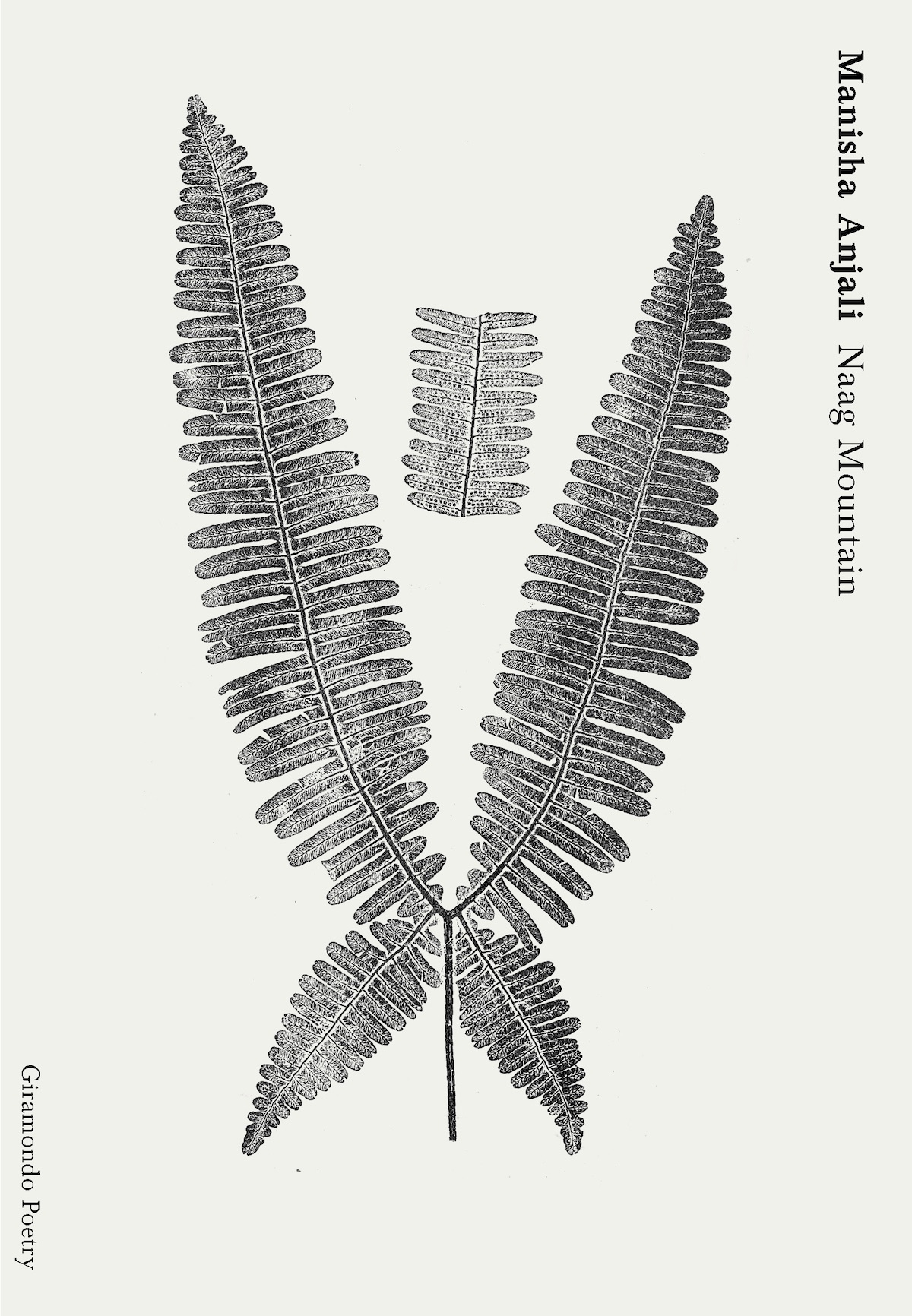
A Naked Saint disembarks in Fiji in 1879 from the first ship to arrive from Calcutta in this thrilling collection of prose poetry. From his papers, his “instructions for metamorphosis”, he rolls a joint and folds a paper jackal. He is an indentured worker, brought by the Colonial Sugar Refining Company to work the sugar plantations. Over a century later, the poet takes a pilgrimage, from the sugar cane fields of the Queensland-New South Wales border, to Port Douglas where she was conceived when “two cane toads are dancing outside the kitchen in the rain”. Those cane toads, introduced to control cane beetles which prey on the sugar, resonate:
an animal labourer for the colony. The cane toad went down the road of hurting the land. The coolie went down the road of hurting themselves, unable to stitch back together pieces of spirit.
“I ask the road to welcome me,” she writes, “But road has lost its memory too”.
The chorus grows. The poet’s “friends across the Tasman”, whose ancestors left Fiji following the collapse of the girmit system of indentured labour, dream “our dreams” in Aotearoa. The Naked Saint is joined by other workers, some of them the poet’s ancestors. Sometimes the narrator is the “I” of the poet; other times it is the “we” of this chorus; other times it is the “we” of the thousand-headed snake, the naag.
For Naag Mountain is about what is carried and what is left behind as people move, under their own will or under duress, across oceans. Manisha Anjali is less interested in what few physical items may be passed down than the dreams that make up a people’s collective subconscious: myths, legends, creation stories, rumours passed down the family line. Displaced from their land of origin, these dreams become “fractured, manipulated and half-forgotten”. They mutate and transform, take tentative root in new land, stretch across the far-flung corners of the world where the people now live. Anjali summons those dreams to wander among them.
This is a different kind of archive from the official one. In a note, Anjali explains that archival research formed the backbone for this collection. But archives are political, the information within them used to exert control over the subjects of empire and facilitate the extraction of labour and resources. Information on real family members is scant, like her great-great-grandmother Rani “whom we do not have an origin story for”. This understanding has bred suspicion:
We had knowledge that was shared telepathically, by mouth, ear and performance. The written word was a tool for the manipulation of truth. Every truth that was written down intercepted our oral histories. When a story is shared by mouth, the story is never the same, it changes the way it wants to, and every version is true.
Dreams, then, resist this control over truth and information, and so resist control over bodies. Naag Mountain builds on the work of First Nations poets like Charmaine Papertalk Green and Elfie Shiosaki who are reinterpreting archives to realise the full humanity of their ancestors in the colony.
There are dream machines in Naag Mountain, or technologies for recording memory. One is the cassettes that record folk songs. Another is the fictional and only semi-ironically titled film Paradise, “obscure, banned”, which “emerges from the waves” as the poet reaches Port Douglas and frames much of the collection’s second part. Actors walk in and out of the film into the ocean, into real life, exerting agency over what traces they leave behind. Others are the “hidden instruments” that play music that has been forgotten, “elusive in appearance, and experimental in design”. This spirit of remixing and refashioning with what is at hand animates Naag Mountain, like the conch shell the poet holds to her ear:
the shell was made by an animal spirit with a longing to live, and a vision for love that spanned across generations. The seashell outlived the animal but carried their spirit in soundwaves. I hear the sounds of paradise from the future. I go to the end of paradise to live my destiny.
Each of Anjali’s words is as carefully chosen and polished as a gemstone, grounding the abstraction of the dreamworld in the concrete. Recurring words — flowering trees, swans, moon(s), the ocean, the curiously specific attention to the make and model of cars — take on the power of symbols. The poems’ opacity — masterfully sustained over the collection — evokes a fractured and half-forgotten dream. Colours seem to have weight and tactility; music becomes colour. Even when Anjali abstracts the material world — Fiji becomes “a levitating green prism” — it has the cut and clarity of a crystal. This is thrillingly immersive, incantatory poetry. Let its spell transfix you.
Gay rating: not gay.
Discover more from The Library Is Open
Subscribe to get the latest posts sent to your email.
 The Library Is Open
1 Comment