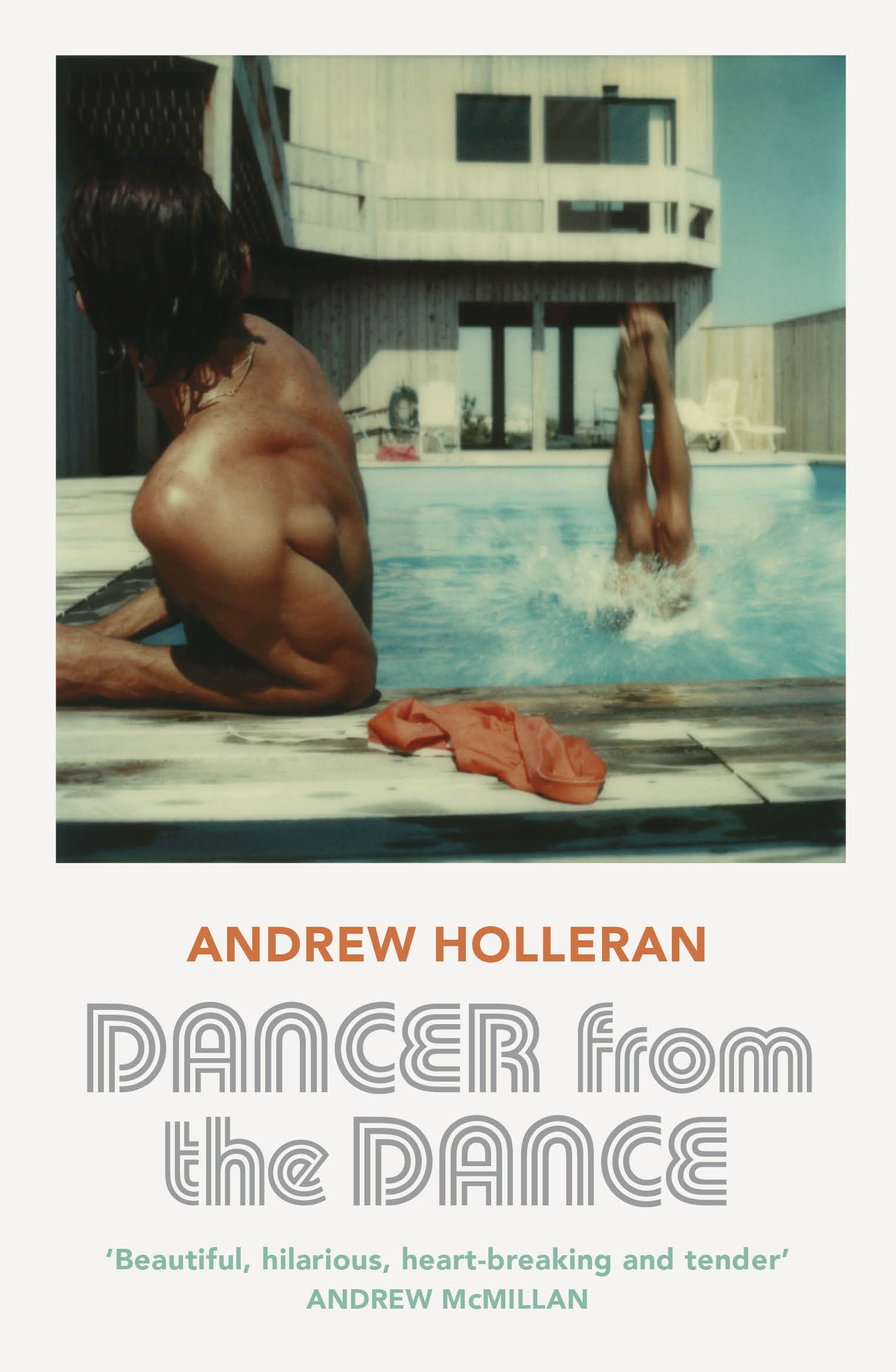
This novel begins in the Deep South, where someone going by the nom de plume Agatha-Helene de Rothschild trades missives with a friend in New York who signs off as Madeleine de Rothschild, a sister in spirit, perhaps, if not in blood. If you suspect something camp is afoot, it is soon confirmed by Madeleine, who writes that she is “in fact so depressed that last night while Bob Cjaneovic was sitting on my face, I began to think how futile life is, no matter what you do”. Madeleine — also Marie and Victor Hugo — reveals she has written a novel that promises to tell all about New York’s gay scene, leaving no scandal unturned nor queen unstoned (“there are no innocents to protect!” he writes). It is just such a scene that our southern belle has fled in utter weariness for the peace and quiet of the countryside. “Homosexuality,” he writes, “is like a boarding school in which there are no vacations”.
So we are presented said novel, titled Wild Swans by its author. Wild Swans, as told by an unnamed narrator, fixates on friends Malone and Sutherland. These two circuit queens are poles apart: Malone, a lawyer who gave it all up for the scene; Sutherland, who seems to have been born into it. Malone: masc and worshipped for his beauty. Sutherland: femme, bristling with an armour of costume and campery. Malone: “the most romantic creature of a community whose citizens are more romantic, perhaps, than any other on Earth”. Sutherland: “I only exist in New York, take me off this island and I evaporate”. Yet the scene coheres around this odd pair; they are there at all the parties and discos, can be found in winter in the city and every summer on Fire Island.
It’s the 1970s and a new club opens every weekend, and everyone is coming out, or at least, coming to the city. Dancer From The Dance is an astonishing portrayal of a time and place that feels strangely familiar. The stench of poppers rises from the page like a Troye Sivan concert. “The young queens today are utterly indistinguishable from straight boys,” laments one of our letter writers, as if he overheard my friends in Collingwood. The ecstasy of the queer dance floor could be Sircuit today. The only detail that dates the novel is the presence of tambourines brought by guests to shake with the music, which really seems like something we should bring back. “We’re completely free and that’s the horror,” Sutherland proselytises. Not that the scene is without its dangers; homophobic violence is rampant. The Stonewall Riots of 1969 had clarified an era of sexual liberation for queers in New York which soon spread across the West, only to be slowed by the decimation of AIDS.
But to what end? Dancer From The Dance is an unflinching study of the gay male condition, and it is often unsettling and unflattering. It evokes the circuit as a ride that you can’t get off, an endless parade of beautiful men whose faces all begin to blur into one, a “democracy whose only ticket of admission was physical beauty … because its central principle was the most anarchic of all: erotic love”. Malone and Sutherland represent between them a spectrum of how to inhabit this society. Malone is self-hating, earnest, turning almost to asceticism as the novel progresses (after a decade of sluttery that would put the most seasoned queen to shame it must be said). Sutherland luxuriates in it, a acerbic quip always at hand to disarm. But the circuit does indeed have an exit, as all life must do. The trick, it seems, is to leave the party gracefully, or at least dramatically, so that you’re remembered.
Despite its specificity, Dancer From The Dance has a timeless quality, aided by its narrator, who seems sometimes to be an individual, at others a Greek chorus, the “dark figures crossing the piazzas” or shadows in the bushes where the men cruise for sex. He/they are the Nick Carraway of the novel, always watching, always at the edge of the party.
Gay rating: 5/5 for queer characters, relationships, sex and themes — indeed you’d be hard-pressed to find a straight character.
Discover more from The Library Is Open
Subscribe to get the latest posts sent to your email.
 The Library Is Open