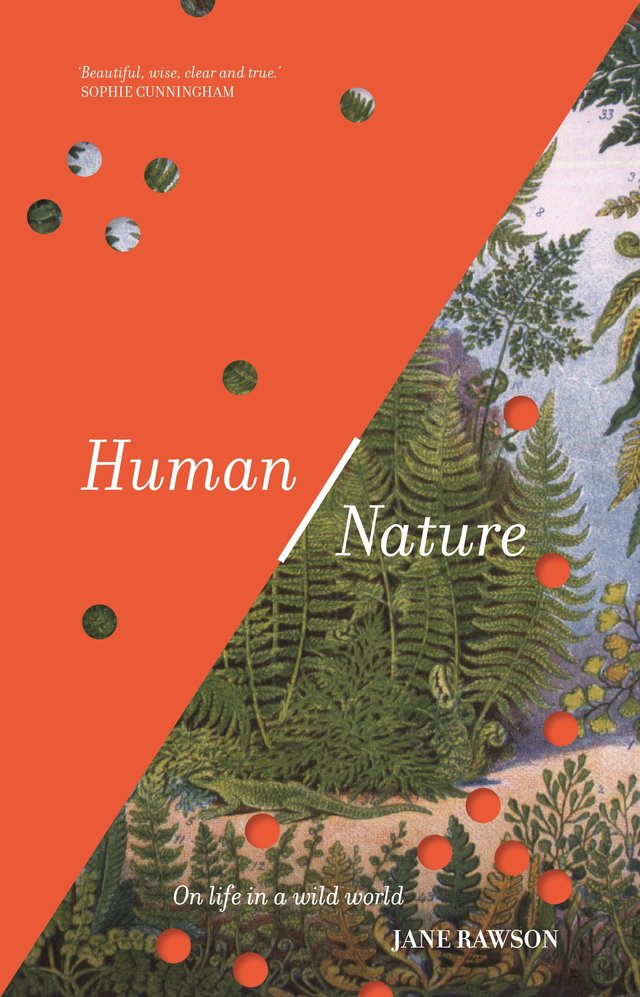
At the heart of human existence is a paradox. These days, I reckon (hope?) at least a few of us understand that we are part of nature (the result of evolution, with a particular evolutionary history, embedded in an extraordinarily tangled web of life, matter and energy). At the same time, we are also separate from it. We understand that separation in different ways. For some, it is culture that marks us as different, or intelligence. For others, it is our impact on the world, such as the rather terrifyingly named “novel entities” that we are layering into the rocks of the planet, to the extent that they define a new geological epoch. For some (many of Australia’s political and business folk, for instance) nature is “a burden or an annoyance”, as Jane Rawson writes in this brilliant collection of personal essays.
But for every way we draw the border, there’s a riposte: many animals have culture and intelligence; and plenty of lifeforms have utterly and irrevocably altered their environment (looking at you, first plants). And how annoying and burdensome when crops, water and power fail because we didn’t look after the environment? No matter how strong the walls we build, there’s always something that can bring them down, whether the gentle weathering of lichens and wind or something more cataclysmic. Trying to parse the border between humans and nature, holding the separation and the togetherness in your mind at the same time, will drive you nuts, except it does seem that there is a border.
Perhaps a better question then is what the category of nature does. It’s an active thing. It serves some, and oppresses and exploits others: some animals are seen as more human; some people are seen as less. What nature, the idea, does is the question Rawson pursues. She begins by introducing herself, someone who is actually rather terrified of nature. Nature is full of things that can kill you after all. In her home in Tasmania, she’s a non-bushwalking outlier, much more comfortable with “towncraft”, or navigating to the nearest bookshop and wine bar. Nevertheless she’s also someone who has spent her career writing and wondering about nature, it’s “at the heart of my politics and my creativity”.
Across six essays Rawson ponders questions like, what is conservation actually conserving? Does extinction matter? Why is intelligence used to mark us as different? Should we really be slaughtering vast numbers of introduced species in the name of protecting nature? And what is an introduced species anyway? How can we wrestle with the unstoppable and uncontrollable fact of death? She runs over these questions, needling at them to reveal the questions that lie underneath them, making visible the invisible boundaries that circumscribe us from the world. Her responses are pithy and provocative. On eulogising nature despite it manifestly still existing, and despite our responsibility for its demise:
We are the remorseful predator and nature is lying ravaged on the picnic blanket … We feel sad in a lovely, profound way when we think about her imminent demise. She was so good! We were so bad 😦 Naughty us.
Or the “war on cats”:
irresponsible, simplistic and immoral … lie down on a road in protest for half an hour or blockade a coal train, and you’ll quickly find out that the war is on you.
In other words Rawson finds our conception of nature wanting, its separation in service of the usual suspects. Take wilderness, for example, “the purest kind of nature”, and yet one that usually depends on being cleared of its original humans, as in Tasmania, now the almost exclusive domain of bushwalkers in expensive outdoor gear (me among them):
How are we supposed to reap the benefits of nature if the only nature that counts is one that most of us will never be close enough, well-resourced enough or physically able to visit?
If these essays were animals, they would be the quolls that take up residence under Rawson’s porch in Tasmania: feisty, unpredictable, playful, they might give you a nip and then flee into the bush. It turns out that a person somewhat scared and skeptical of nature is an ideal guide to these questions. Rawson comes at them aslant, revealing unexpected resonances through her own life, such as in the essay On Minds And Intelligence, in which she tells of becoming sensitive to noise in suburban Melbourne, the proximate prompt for her move to country Tasmania. The death of her cat Tonka becomes a meditation on “somewhereness” and belonging. The farmer shooting the pademelons next door sparks a contemplation of extinction. Describing the official conservation biology attitude, she writes that “individual pademelons are not precious”. Nonetheless, she writes, “I see animals like pademelons the way a child sees, as furry people with personalities and loves and hopes and joys.” Rawson offers that we are inescapably animal, full of loves, hopes, joys, and, yes, fears. Perhaps by restoring our nature-ness (and the people-ness of nature) we might all get on a bit better.
Gay rating: not gay.
Discover more from The Library Is Open
Subscribe to get the latest posts sent to your email.
 The Library Is Open
1 Comment