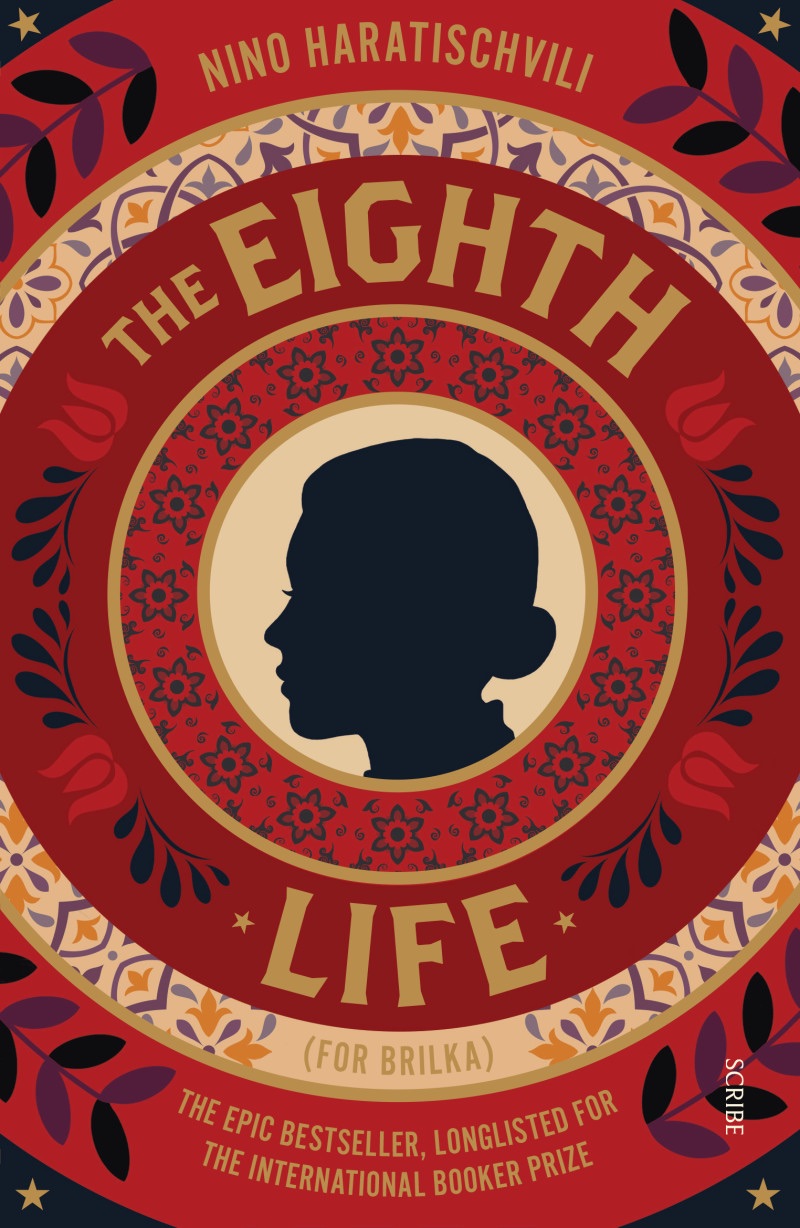
This vast family saga begins in Berlin in the first decade of the 21st Century. A 30-something woman, Niza, “well on my way to becoming a tragic figure”, has just had love confessed to her by her sometime lover. She gets a call from her mother in Tbilisi. Her 12-year-old niece, Brilka, has absconded from the dance troupe she is touring Europe with and is on the road to Vienna. Can Niza go and retrieve her and return her safely to Georgia? Niza begrudgingly accepts her task, which may be just what she needs to finally exorcise her addiction to the family stories she has been compiling over the years and “the stories behind the stories”. As she moves towards Brilka physically, she begins to weave a “tightrope” of stories between herself and her niece, encompassing “a century that cheated everyone, all those who hoped”.
From what might initially seem to be the setup for a quirky road-trip sitcom, The Eighth Life quickly expands epically, first taking us back to the early-20th Century, where Niza’s great-grandmother Stasia is being courted by the White Guard Simon Jashi. Theirs is a brief romance before it is interrupted by the Russian revolutions, which bring about over 50 years of Russian rule in Georgia. Stasia dreams of becoming a dancer in Paris. She is also the inheritor of her father’s recipe for chocolate, which permits its drinker to “for a few minutes [to forget] the world around her”, and comes with a warning that “too much of a good thing can bring about too many bad things”. Across nearly a thousand pages The Eighth Life weaves together the stories of Stasia’s descendants and relatives across this eventful century: Stasia’s beautiful sister Christine; her military son Kostya; her musical granddaughter Kitty; and so on until it returns us to the present. The women become rather tragically entwined with another family, the descendants of the divorced feminist poet Sopio Eristavi, who Stasia first encounters dressed as a man.
As you would expect from such a scope, The Eighth Life is full of incident, often harrowing, whether the torture of dissenters during World War II, a hushed-up nuclear accident, or the paralyzing ennui and cynicism as the Soviet Union crumbles. A character’s flight and exile in Western Europe is terrifically exciting but profoundly melancholy. Yet for all its events, The Eighth Life wears its history lightly and with great clarity: Haratischvili often dispatches chunks of it at a time for context, before returning to her focus. Books this length work by accumulation and endurance; Haratischvili maintains her careful pace, trusting that even if its delicate balance of history and character, geopolitics and domestic interiors initially feels cursory, it will eventually bear fruit.
I have fairly thin patience for stories where chocolate is a metaphor for human experience, but here it is gratifyingly understated. The chocolate puts its drinkers into a dream or memory state, potentially fatal to themselves or those around them. Over the course of the book its sporadic appearance provokes a spiky sense of dread, taunting you to trace the curse, blame it for the misadventures that befall the characters. Its cost is ambiguous: a fugue state of dreams and memories, hopes and idealism that prevents its users seeing the world around them clearly, and don’t we all need a little escapism every now and then?
Equally pleasingly, Haratischvili does not have anything definitive to say about the way that history works. As with the chocolate, she is ambivalent about “the end of history” that saw capitalism and democracy (“a question of perspective and interpretation”) arrive in Georgia. As Krushchev denounces Stalin in the 1950s, Niza wonders at how “the victims had long since become perpetrators; the perpetrators victims”. “Where was all this wretched truth-telling heading?” she asks. Stalin was of course Georgian, a personification of the relationship — imperial, yes, but also symbiotic — between these two old nations. “Everything it waiting to come back,” Haratischvili writes ominously (the novel ends before even Russia’s 16-day invasion of Georgia in 2008; I wonder what she would have made of the following decade). The Eighth Life offers a small grace-note: the possibility that the next generation might escape the curses of those that came before. Perhaps more importantly, it acknowledges their agency, to realise, or not, their dreams of a different world.
Gay rating: 4/5 for queer characters, sex, relationships and gender nonconformity throughout.
Discover more from The Library Is Open
Subscribe to get the latest posts sent to your email.
 The Library Is Open
1 Comment