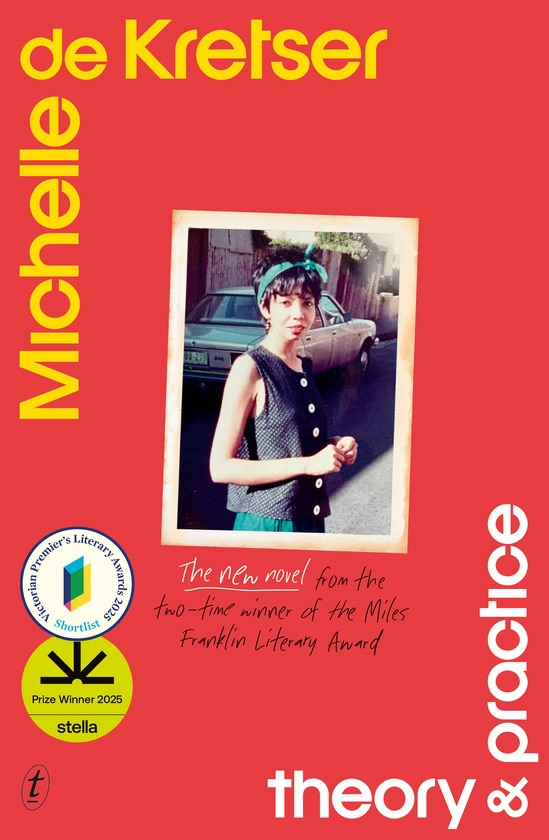
It’s 1957, Switzerland, and a young geologist is enjoying the rarefied air of the Alps, but he’s troubled by dreams and memories. As a child, he spent a few months with his grandparents in regional New South Wales. There, in a fit of anger, he stole one of his grandmother’s rings. He let an Aboriginal maid take the fall.
But before we can explore the consequences of this, we’re transported to another time and place. The geologist’s story is a novel that our narrator is working on, seemingly stalled and never to be returned to, but its events cast a long shadow. She takes us to Melbourne, where she was studying for a Master’s in English. It’s the late ’80s — her flatmate in St Kilda has just bought a Mac, AIDS is casting its shadow, rents are going up, and apartments are being demolished. Theory has arrived in the humanities department. That is, post-structuralist theory, and its ideas of the fluidity of meaning. The narrator is applying Theory to the novels of Virginia Woolf:
Critics applying Theory to literary texts liked to cast themselves as torturers … Things always ended the same way: the text came apart, divulging its hidden significance. That was The Story Under The Story. When it was revealed and the text was in pieces, the critic had won.
The narrator, whose name “signified Common and Dumb” (and is revealed only at length; there are many portentous names in Theory & Practice), excavates The Story Under The Story, not just in the works of “The Woolfmother” but in her own actions, as she becomes the lover of a man in a “deconstructed relationship”. Think of it as a post-structural, post-colonial fairytale. It reminded me a little of Damon Dalgut’s The Promise and its examination of who can get away with things, and who can’t.
This is an interrogation of idealism, that the world is endlessly mutable and can be refashioned with the stroke of a pen. Wry and juicy, de Kretser goes after hypocrisies left, right, and centre. Everyone is capable of violence and domination, and everyone is capable of turning their head when it suits. But this novel isn’t just out to toy with our distaste for hypocrisy. It lives in the “interregnum” between theory and action, or what Aristotle might have called poiesis, “action-for-making”. With unswerving attention to the material — de Kretser writes of the Israeli military’s use of Situationist theory in Palestinian massacres in the West Bank; later she wonders at the cruelty of adulated paedophile artist Donald Friend — she asks if it all comes around, in the long run.
Gay rating: 3/5 for queer characters and themes.
Discover more from The Library Is Open
Subscribe to get the latest posts sent to your email.
 The Library Is Open