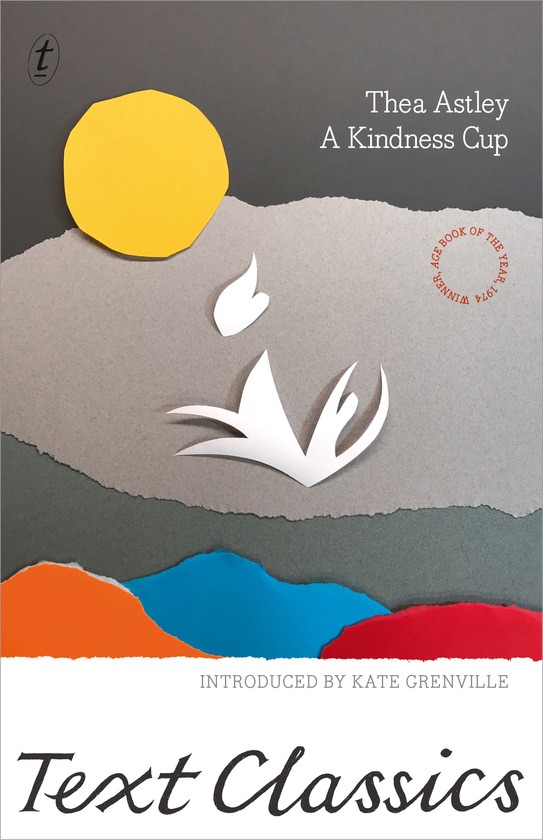
Can’t we just forget all that bad stuff that happened, let bygones be bygones? Do we really need to bring all that up again? Such are the questions asked by many of the townsfolk in north Queensland in this ruthlessly to-the-point novel, and the questions that continue to be asked by many over a century later.
Twenty years after an atrocity against Aboriginal people, retired teacher Tom Dorahy receives an invitation to return to the place of his employment, where he attempted to teach the privileged sons of wealthy landholders and frontiersmen, like the Buckmasters and politician-seeking-re-election Barney Sweetman, known for “handling” sugar strikes. Return Dorahy does, with vengeance and justice on his mind, and soon ropes in accomplices to disrupt the town’s commemorations: young Jenner, who showed promise as a student; Snoggers Boyd, the local newspaperman; and Charlie Lunt, who became collateral damage. Dorahy is a fanatic, about justice, but also, in one of the novel’s few light touches, about grammar and its abuses — he is almost as upset by cliches and misconjugation as by colonial violence.
We learn of the atrocity through their recollections; the massacre of six Aboriginal people by a ragtag army of troopers and passersby. Court proceedings from the time reveal incompetence, insubordination and incoherence, it doesn’t seem possible that they would get away with it — and yet. Like Forster in A Passage To India, Astley is precise about the operations of colonial violence, and the worming-wiggling way the townsfolk try to minimise what they have condoned: “a natural course”; “growing pains”; “unhappy events”; “wrongly placed enthusiasm”; a response to “the extra annoyance” posed by the existence of Aboriginal people. There’s absurdity here too, but it is as abject as the novel’s ironic title. Astley evokes the garish beauty of the north, its brilliant greens and blues. Despite the reassuring monoculture of the sugar, “the benison of cane arrowing on the back roads … the beige spearhead of flower proving gentleness”, the landscape has an overlit quality, a place where truth may be ignored but cannot be hidden.
A Kindness Cup is hazy about time and place, but it must be Mackay late in the 19th Century, where a massacre did take place at The Leap or Mount Mandurana (Mandarana in the novel) in 1867. There, 50 people were murdered by Native Police, Aboriginal troopers led by European officers. The only survivor was a two- or three-year-old girl. In 1990 historian Clive Moore concluded that “probably others from her tribe were forced to jump”. While the details do matter, it stands for everywhere in Australia where Aboriginal people were murdered from the arrival of the First Fleet until the 1920s, as documented in horrific yet blunt detail by the Colonial Frontier Massacres in Australia project. Yet Astley was writing in 1970s, before a resource like this existed, before the History Wars (or at least in their early salvos), not that long after the 1967 referendum that granted some basic democratic rights to the original owners of the continent. Of course it has its limitations — the Aboriginal characters are barely lived in, only a few shades removed from the paternalism that excused so much violence — but perhaps that is all it can be. I can’t imagine what the reception to the novel was at the time — it won The Age Book Of The Year — but it seems well out there.
Or was it? Part of what makes Astley’s novel so compelling is its thesis that there have always been those swimming against the tide. “History has two faces,” Dorahy reminds us, “There’s another side to it. I want the other side to be seen.” It is a forceful rejoinder to the willed forgetfulness and special pleading that our ancestors didn’t know any better — far harder to admit that they probably did, and could have chosen otherwise. Most affectingly Astley documents the resolve of those who turn away from the national story. As Boyd chooses truth-telling, he understands what he is giving up, the “cheerios that will never be waved again”. In weaving various forms of departure — physical, social, historical, moral — Astley reminds us that there is no turning back once the truth of Australia’s history is exposed.
Gay rating: not gay.
Discover more from The Library Is Open
Subscribe to get the latest posts sent to your email.
 The Library Is Open
1 Comment