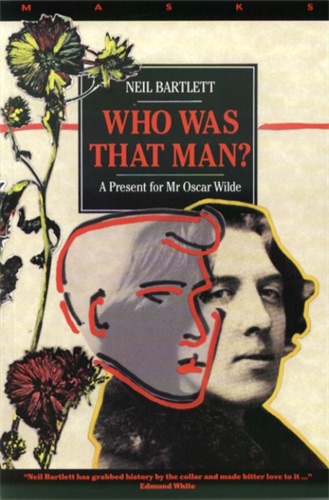
“We are born late,” Neil Bartlett writes of gay men (though it resonates with queers more generally) in this bracingly original cultural analysis. Gays are born when they come out, a process that often involves a move to the city. Perhaps it’s better described as a coming into: “I started to talk to other people for the first time, to go to places that already had a style, a history,” Bartlett writes of arriving in London in 1981 in his early 20s. Like many even today, Bartlett assumed gay history began in the 1970s in the US following the Stonewall Uprising. But he intuited a history that was all around him, not exactly hidden, but sitting unnoticed in plain sight alongside the streets he walked. In pursuit of this history, Bartlett swaps nights at the club for hours in the library, poring over the works and world of the London homosexual “with the dogged energy I usually reserve for cruising”. “There is,” Bartlett writes, “Just one, whose name everyone knows”: Oscar Wilde.
Separated by a century, Bartlett reads Wilde’s works as only a gay man could: against the grain, between the lines, deciphering the “small declarations” in plain sight and reading the asides and codes for evidence that we were here. The result is an invitation into the open-secret of gay identity: the club is there all the time, all around you, but you still need the right passwords to get in (dress, sibilance, meaningful looks, etc). It’s the mysterious sense of recognising another queer across a street and time and space; it’s Cate Blanchett flicking her wrist when talking about Disney villains. Bartlett pursues these signs and symbols through Wilde’s collected works and their paratext: the fictions, memoirs, diaries, court documents and newspaper scandals that were Wilde’s context and often the sources for his work. So in Salome (a depiction of a queen in the queer sense of the word) Bartlett traces the symbolism of the flowers; in his short story The Portrait Of Mr W H, he wonders at how every gay love affair seems cut from the same cloth.
Towering over Bartlett’s analysis is Dorian and his portrait, Wilde’s scandalous 1890 novel. “Every word,” Bartlett writes, “Is about it“. This was recognised at the time; one review recommended the novel for “outlawed noblemen and perverted telegraph boys”. In one extraordinary chapter Bartlett hoards fragments of gay existence in the 20 years to the trial that found Wilde guilty of sodomy and gross indecency. Rich, entertaining and harrowing, Bartlett illuminates an entirely fascinating portrait of a hidden city, including the 1870 case of Boulton and Park AKA Stella and Fanny, two outrageous queens who delighted in going to the theatre in full femme and were charged with “conspiracy to commit a felony” ie sodomy. They got off, in part because the court could not bring itself to admit that such a crime was possible on English soil. Wilde would not be so lucky 15 years later.
What are we looking for when we trawl the archives for evidence of ourselves, Bartlett wonders? Kinship certainly:
Would you then be able to talk to, understand, even flirt with those men from ninety years ago, if on some extraordinary drugged evening we could all meet? It would be like costume night at the pub; such strangely different styles and voices, but no one a stranger.
Despite the love that seeps across the pages, this is no hagiography. In Wilde’s time, aristocrats exploited and abused poor young boys, and adulated this relationship with almost religious fervour. In Bartlett’s, gay identity has become consumable, something that can be bought. In both, femme queens (many who would probably identify as trans today) are despised and ridiculed; the cane of patriarchy and misogyny continues to cast its long shadow. Liberation always seems a distant horizon. Wilde’s public outing had a chilling effect; in Bartlett’s time the effusion of the 70s has been curtailed by the arrival of HIV/AIDS. We are entering another period of bedding down, with trans people under attack pretty much everywhere, hate crimes through apps on the rise, and even gay men in the US being arrested at scale once more (fuelled by a renewed moral panic over gay sex). It may be time to gird ourselves once more. Bartlett’s analysis offers the comfort that we have lived through such times again and again.
Gay rating: 5/5 for gay themes, people and sex.
Discover more from The Library Is Open
Subscribe to get the latest posts sent to your email.
 The Library Is Open
1 Comment