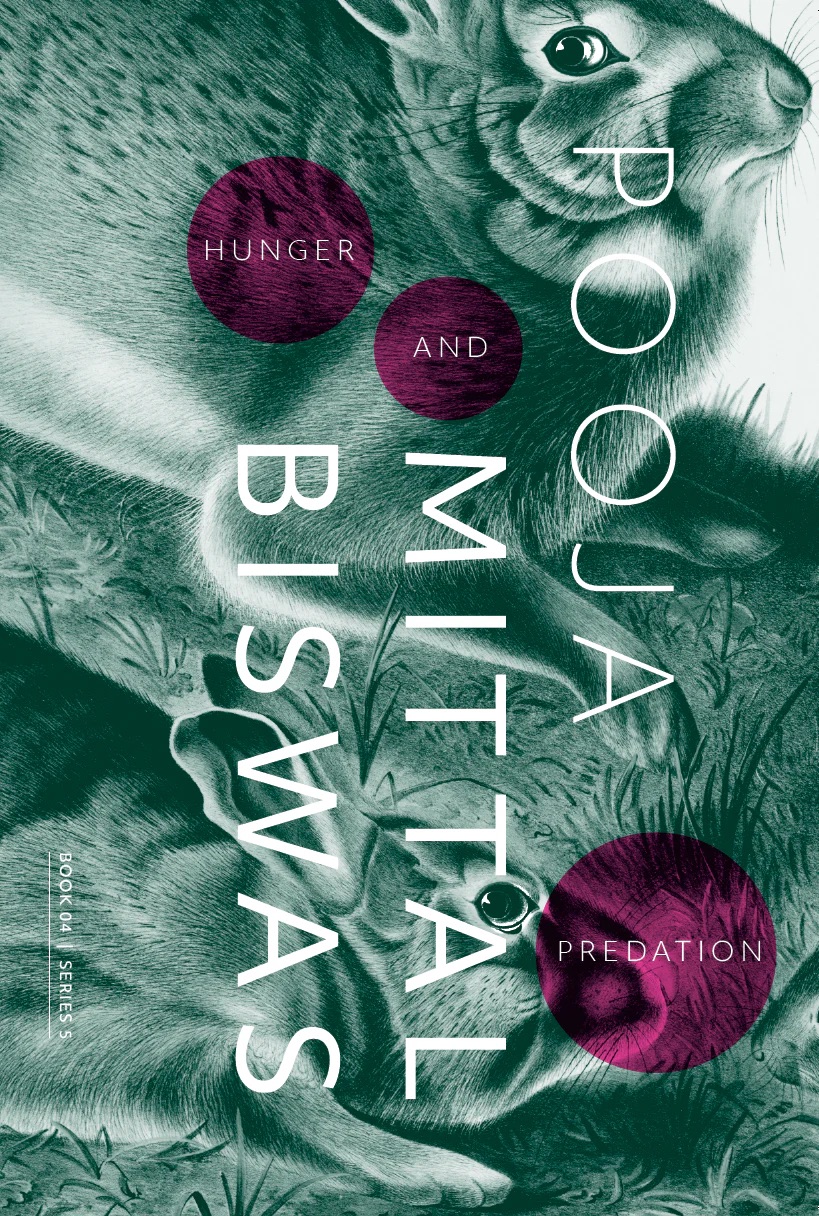
Myths, dreams and madness flow through this collection. These are grounded in poems entitled Western Sydney Fugue that are interspersed throughout. In the first, Parramatta, the poet introduces herself, pregnant, born in Nigeria. “I too will be reborn,” she writes, “as a mother, an Indian, an Australian”, reflecting both the imposition and instability of identity. “My child,” she vows, “My child will speak”.
A fugue is a piece of music but also dissociation. In Hunger And Predation, it suggests both, as Biswas wanders landscapes physical and metaphysical, visiting nightmarkets and streets in western Sydney while conversing with the deities of Hinduism. She is particularly drawn, as an agender asexual, to those who confound the confines of gender, a spiritual genealogy to locate herself in. In Garlands it is Shikhandi who “killed myself a thousand times/until I gained the body/I wanted” so that she could go to war; or in S/he Biswas considers Ardhanarishwara, who is the union of Shiva and Parvati. The poet writes with a longing to be “held here by love & not duty/to shape or form, logic or ill”. In Hir — a pronoun and a proclamation — she writes of gender as “the passing of a train/on which you are not a passenger”, “a cartography of the mind/that history has mapped/onto people”. “Being embodied,” she writes at the opening of that poem, “is the opposite to being trans-bodied”.
Biswas considers this instability of embodiment in conversation with the violence done to feminised bodies and how they are taken apart, metaphorically and literally reduced to parts. In opening poem, To Miranda, From Caliban, Shakespeare’s monster speaks chillingly of “the little bones, xylophones,” and promises that “I will make you a noise”. The poet describes being assaulted as a child and its legacy of madness; rage, she writes, “you put it there”. That rage is all-consuming, transformative. “When she dances, the world/burns/or maybe she does. There is/no difference,” she writes in Audition No. 5. In Glitch, a highlight, she writes:
… men claim
that I am nothing but a hole. but
if I am to be that hole
then I will be a black hole,
centrifugal, brutal, relentless,
crushing all it consumes,
as Kali does mid-dance.
Biswas evokes with furious grace the animal forces that resist this vivisection — a forest come alive in the monsoon, the ravenously hungry wolf that accompanies her throughout this collection, that is both her and not-her. In Like the boys do, which recounts an ecstatic encounter with a girl, “The shivers” become overwhelming, “the feathers/the quaking of falconry underneath us”. In Anatomy Of An Orgasm she is taken out to sea:
where all things are strange
& I am no stranger than them, creatures
alien to us both
floating past us in the depths, luminous
& translucent, their glowing limbs
extended trustingly into the black.
we swim by the light
of underwater volcanoes, their fire
blooming crimson
in the dark, sea anemones
of magma welling blood-like
from the earth.
These poems are most potent when they evokes this meaty, earthy sensuality.
Gay rating: 5/5 for queer themes, sex and relationships.
Discover more from The Library Is Open
Subscribe to get the latest posts sent to your email.
 The Library Is Open