There’s a frame. Inside the frame is a painting of a brown young person. They’re naked and sitting on a chair, not completely upright, a monkey by their feet. The painting is Annah la Javanaise, painted by French artist Paul Gauguin in 1893-94. Who is looking at this framed picture, who creates the frame? Over the past century-and-a-bit it has been an overwhelmingly white and Western gaze. The person in the picture, Annah, viewed as a girl in her early teenage years, has been characterised as a hot-tempered muse, co-opted to elevate the sexual expression of their creator, a “tantalising femme fatale” who triggered Gauguin’s downfall. They have been portrayed as such in film and literature. None of this is based on much evidence; the archive is scant, a few photos and letters.
Gauguin produced the artwork between stints in Tahiti, where he painted other young brown people and took three child brides in their early teens when he was in forties and fifties. The painting has a second title in Tahitian; it’s “plausible that multiple brown children [were] mistaken for one”, Java-born writer, poet and artist Khairani Barokka writes in Annah, Infinite, a book she describes as being “in the form of a long-withheld scream”. “They have never been able to tell us apart,” she writes later, “All that matters is that details, people, are possessed and possessable”. Gauguin was, and continues to be, celebrated and valued for his embrace of the art tradition of primitivism.
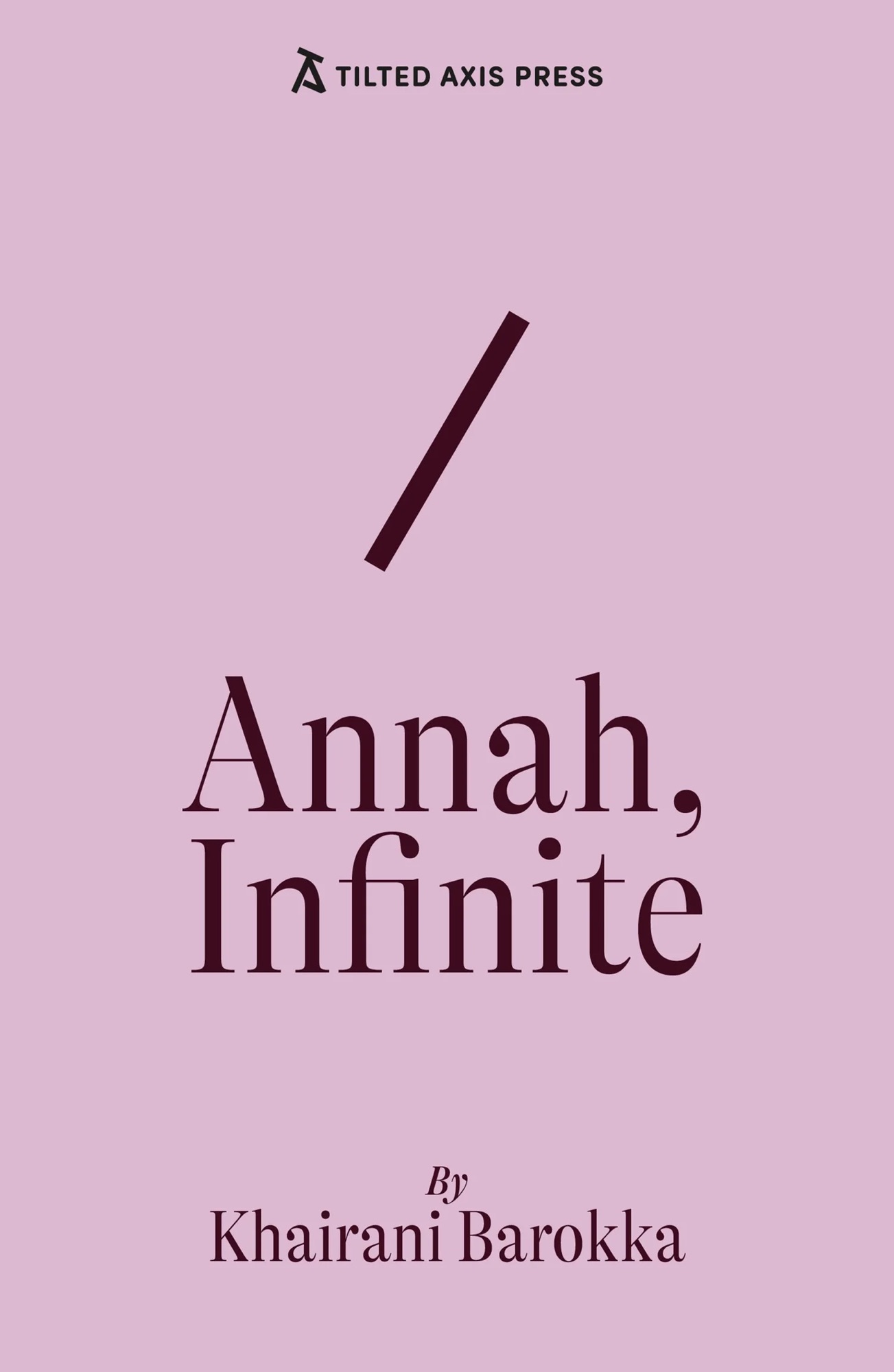
Barokka came to the painting in 2011, a time when, due to nerve damage, she was “wracked by pain … beyond all belief. Truly beyond belief — neurologists dismissed me.” It took for years for her to receive “good enough medicine” to begin to manage the pain. She is clear to call this torture, the denial of care that follows disbelief. Annah, Infinite follows over a decade of pain, research and artistic engagement with Gauguin’s painting.
The book is written as one long caption, a resistance to the ocularcentrism of the visual arts that privileges sight over other ways of knowing. Images in the text are described similarly, a straightforward but very useful intervention, especially if reading as an e-book. Annah/s (Barokka’s way of styling the name for the multiple possible children in the painting) have been framed “so as to deny the truth of personal infernos”; the painting “is very possibly a portrait of a young girl in pain”. There are many good reasons to think so: Gauguin was a known abuser; Annah/s were a young brown person away from their family and land, possibly enslaved. Barokka’s argument, through an exhilarating torrent of poetry, essay, visual art and short fiction, is not that Annah/s must be definitively pained, but to examine why this possibility has been comprehensively ignored and denied.
In doing so, she reframes not just the Western artistic tradition but empire itself as a pain-generating machine. Colonised peoples, those under the duress of racism, ableism, sexism, homo- and trans- phobia, are simultaneously made vulnerable to pain while also being denied the possibility of suffering from it. This “infrastructure of disbelief” is not just the typical expressions of state and capitalist violence (police, military, borders) but:
consists of societal prompts and non-human materials. It is the fibre optic cables, lithium and cobalt mining for our phones, the abuse of employees in electronics factories, as well as the carcinogenic ‘Erin Brokovich compound’ that sickens people around Indonesian nickel mines quarried for supposedly green cars. It is every single electronic device used for surveillance being part of a chain of immiseration and exploitation. Disbelief is inherently tied to colonial, capitalist environmental extractivism
Barokka describes this disbelief operating in lack of accessibility, in academia, where her challenges to white and Western thinking are met with a “tone, verbally polite yet abusive”, the questioning “… yeah?” to her arguments and experiences. It operates on narrative and representation. On Gauguin’s supposed triumph of primativism, itself extracted from colonised peoples, Barokka writes that it worked to “build up his own wealth, fame, ego”, that it was “the building block of every single portrayal of Tahitian women”, women interchangeable with other Asian and Pacific women “depending on the amount of naked female flesh on display”. For colonisers, the bodies of the majority world are terra nullius, “a blurry canvas on which to enact the observer’s pleasures”.
In framing “denial of colonialism as fascism”, Barokka writes against past and continuing colonial violence, the 1965-66 Indonesian genocide, Indonesian colonisation in West Papua, the Israeli genocide of Palestinians:
The forcefield of disbelief, of disregard for Palestinian pain, is the same barrage of unfeeling weaponry that Annah/s faced … part of the same imperialist machine.
Annah, Infinite belongs to critique of the achievements of the so-called Enlightenment. Here particularly under scrutiny is universalism, or at least a limited version of it that extends citizenship and the benefits of it only to those who assimilate and conform. This project is served by the objective gaze, “the project of all-knowingness and supposed ‘universality'”, of which Barokka writes:
is inherent to colonialism and white supremacy. Thus admission of how much we can not and can never know, as individuals, is a refusal of such imperialism.
“I want my pain to go away when it is truly unbearable,” Barokka writes, “But as a manageable thing, in times of ease, I do not want to be abled, ever.” Pain tells us something important; “by being the truth, pain is resistance”. From outside colonial, capitalist, abled systems, Barokka offers tools to manage the pain of duress: indigenous “salvation ecologies” and understandings of disability and care; queering and cripping time; disabled Indonesian gods and the concept of “jiwa raga”, something like “soulbody”. Through her imaginings of many Annahs, Barrokka builds a “glowing, untranslatable patina of possibility”. “I want so many Annah/s to flood the market with different self-representations,” Barokka writes, possibilities that “disrupt the powerful structures of epistemic violence … those that continue to lay claim to a singular ‘truth'”. “Imagining pain in others past, present and future is a bedrock part of change,” she writes. In Annah, Infinite, Barokka cracks the frame, wedges it open, and challenges us to keep heaving against it.
Gay rating: 3/5 for queer theory and discussions of queerness.
Discover more from The Library Is Open
Subscribe to get the latest posts sent to your email.
 The Library Is Open