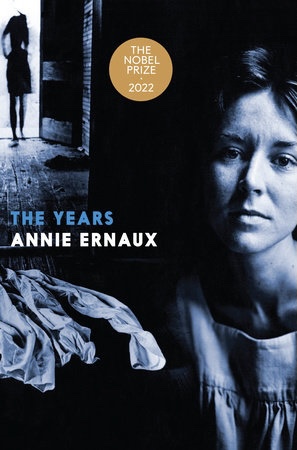
This strange memoir begins with images, flashes of memory captured by Annie Ernaux’s eyes and fixed in her mind. They are disparate: street tableau, scenes from movies and TV, performances, ads, sex, moments elliptical because they are instants. All these, Ernaux notes, will disappear with our last breath and flare of neurons; “we will be nothing but a first name,” she writes, beginning a lifelong contemplation of time and the marks it leaves on individuals, societies, generations.
Ernaux begins the story of her life by describing photo of herself as a baby during the war in 1941 (similar photos act as “time markers” throughout The Years, which Ernaux distinguishes from memories). It is her elders’ memories of the war, and her lack thereof, that mark her first experience of the vast gulf between herself and her parents’ generation, “the time already begun” and “the time where we were not and never would be, the time before”. She recounts her youth, her adolescence, meeting her first husband, going to uni, becoming a teacher. History happens around her — the Algerian struggle for independence, the comings and goings of presidents — but she puzzles over how few marks it leaves on her, except for the general strikes of 1968, which become a kind of fulcrum for Ernaux and her generation, a moment of stalled hope for an alternative, freer society. “We were through through with carefully phrased remarks, refined and courteous language,” she writes, “the distance through which we now realised the people in power and their flunkies … imposed their domination”. That hope returns at various times, but becomes increasingly frustrated.
In parallel to history and to Ernaux’s life is her desire to write this book, her “search for a self outside of History, the self of suspended moments”. She calls it a “palimpsest sensation”, “time in which past and present overlap”. Ernaux draws attention to the way that memory, media and language don’t just passively record but actively generate history. Time and memory are telescoped; Ernaux remembers (or imagines) what she remembered when she was 16, and points out that we don’t know what we will remember in the future. She invites you, through the narration’s shifting pronouns (variously “we”, “you”, “she”, “they”) to pinpoint and identify with a slice of her timeline.
The Years feels incredibly French, confirming stereotypes as much as it complicates. It captures a kind of fervour — furiously political, sporadically violent, relentlessly idealistic, surprisingly nationalistic — as if the Revolution never stopped. The struggle is freedom, but freedom for whom? In her later years Ernaux becomes disillusioned by consumerism and confesses to anxious thoughts about migration (“they were the natives of an inner colony we no longer controlled”) and particularly Muslim migrants, but with clarity around the imperial forces that have surfaced these social tensions. “It was normal for goods to arrive from all over the world and freely circulate, while men and women were turned away at the borders,” Ernaux writes, “To cross them, some had themselves locked in trucks, inert merchandise, and died asphyxiated when the driver forgot them in a Dover parking lot under the June sun.” The Years is a generational reckoning, and it is as tough and honest as you would hope.
Gay rating: 2/5 for brief mentions of queer life, including the HIV/AIDS pandemic.
Discover more from The Library Is Open
Subscribe to get the latest posts sent to your email.

