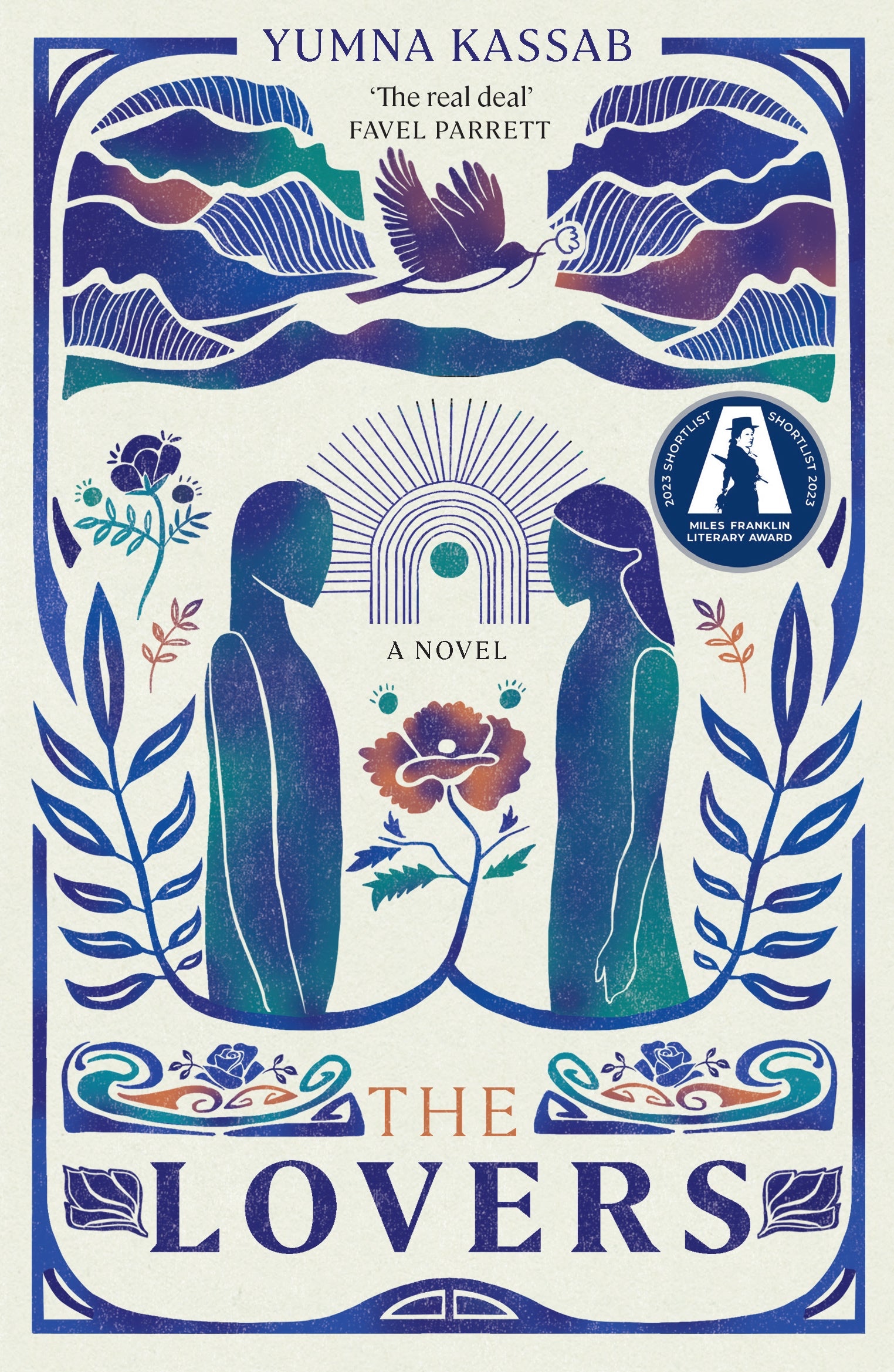
Two lovers, Amir and Jamila, meet at the beginning of this story. Where? It’s not stated, but somewhere with a refugee population from 1948. So Lebanon, I’m guessing, but there are very few specifics to latch onto in this tricky novel (but then again, perhaps the specifics are only hidden to me). Over three novels Yumna Kassab has shown an interest and a knack for conjuring the highly specific — Lebanese households, Australian country towns — without saying anything very specific at all.
In The Lovers, Kassab sketches in plot, character and setting. Amir is a local, Jamila too is Lebanese, but has lived overseas for many years, and is returning on a break from her life, she says. She “smelled of money,” Amir notes; uses “shampoo that cost more than he made in a week”. Amir spends his evenings with his friend Samir, and nights sneaking in and out of Jamila’s room at her aunt’s house. Jamila romanticises the poverty of Amir’s life; Amir romanticises their relationship. So begins an affair as quotidian as girl meets boy; as star-crossed as Romeo and Juliet or Layla and Majnun.
The Lovers lives in the tension between the ideal and the practise. A chapter titled Neutrality begins:
Capitalism is not bad. It depends on how it’s implemented. Communism is good, in theory, but people mess it up.
A nuclear bomb in neutral. It comes down to how it is used.
Later in the same chapter (all of them take the form of Kassab’s signature vignettes), Jamila notes that “It is called peace but the truth is we are more often asked to submit”. Communism, capitaliam, religion, love —- The Lovers questions whether romantic love is neutral or inherently exploitative. “We assume in surveying our lives that when it asked of us,” Amir presumably writes in the section titled Letters:
we will be able to love with the purity of poetry, that we can bare ourselves, when in truth we cannot imagine our existence without the protection of clothes.
So there are gaps between the ideal and reality, there are also gaps between words and thoughts and action, and love reveals inequity as much as it renders its lovers equally exposed. The Lovers unfolds like the poetry of Kahlil Gibran, who is the only real-world figure cited in the book. There is so much air and space between the words. This writing that summons and evokes, rather than providing definitive answers.
Gay rating: not gay.
Discover more from The Library Is Open
Subscribe to get the latest posts sent to your email.
 The Library Is Open
1 Comment