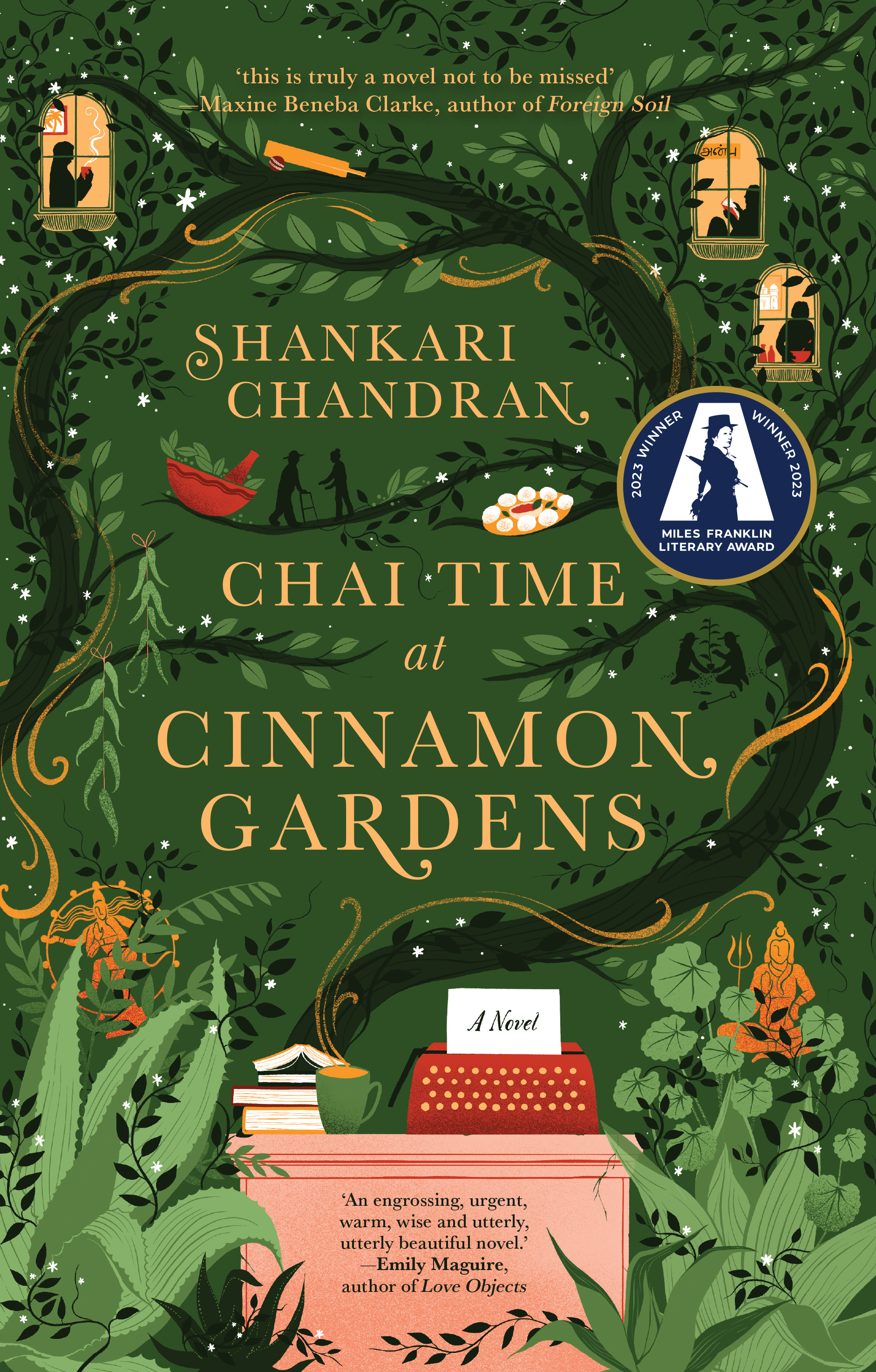
This novel follows the Tamil family of Maya, who bought the nursing home Cinnamon Gardens in 1981 when they arrived in Australia, and turned it into a kind of utopian vision of what aged care could look like. The residents receive personalised meals, there are activities to stimulate mind and body galore, and a multifaith room of worship for every denomination. In the present, Maya is a resident herself while the home is managed by her daughter Anjali. Her husband Zakhir disappeared when he returned to Sri Lanka in 2009, the last year of the civil war. The war casts a long shadow over Maya’s family, and the mystery of what happened to Zakhir may involve Ruben, the home’s scarred jack-of-all-trades who we meet at the beginning being beaten up by three racist white teenage thugs.
While the characters dip into the past to reveal the trauma of their lives during the war in Sri Lanka, in the present Anji is facing the prejudices of multicultural Australia. At the centre of this racist panic is Gareth, councillor and husband to Anji’s best friend Nikki (who is the home’s doctor, and is entangled in other ways). Gareth and Nikki are grieving the death of their daughter, and their estrangement leads Gareth to terrible and desperate behaviour. It’s a melodramatic, multi-generational novel with lots of plots in the air; I found it resolves some of them a little too neatly. It also serves as a neat explainer of the key events of the war — its emergence from pogroms against Tamils; the burning of the Jaffna Library. The violence of the war is extreme and harrowing, as is the racist violence various people at Cinnamon Gardens face, and cuts through like a knife.
The novel lands many punches in its depiction of multicultural Australia. From the dinner parties that Anji hosts with her white friends (including her “unicorn” husband Nathan, a gleefully utopian white man) to the council room with politicians like local MP Mike Davidson (“accepting his birthright as casually as [he] did [his] first investment property in Summer Hill”), Chandran’s satire is astute. The events come to centre on the removal of a statue of Captain Cook, and here the novel connects the work of Tamil scholars and their efforts to gather evidence of Tamil people’s long history in Sri Lanka. “The battle for territorial legitimacy is fought on many grounds,” Zakhir tells his family, “It begins with the battle of competing and contested history”. Overall this is a sharp retort to the demands of multicultural Australia, with its absurd and arbitrary rules about who gets to belong and how.
Gay rating: not gay.
Discover more from The Library Is Open
Subscribe to get the latest posts sent to your email.

