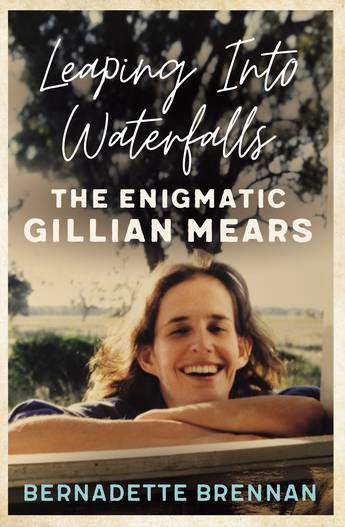
Australian writer Gillian Mears published three novels and over 200 short stories. Acclaimed during her lifetime, she died in 2016 following years of living with MS. She was also a prolific archivist, selling or giving 27 metres of material in 154 boxes to the State Library of New South Wales. It is from these archives that Bernadette Brennan constructs this scintillating biography.
Subtitled “The Enigmatic Gilliam Mears,” Brennan goes to some lengths to expound upon and explore precisely the nature of this enigma. Apparently shy and reserved, she had an astonishingly vivid and exciting inner life, one preserved through her impulse to record. Mears not only kept the letters she received but often drafted or copied her own letters to others, along with diaries and drafts of her published writing. Often she was conscious of recording for a future reader — and biographer. Indeed so vivid is this conversation with herself and others that it is easy to forget the reputation of her outward persona.
Born in 1964 in News South Wales’ Northern Rivers, Mears grew up in a household of four sisters. They were horsewomen, and her last novel, Foal’s Bread, draws extensively on her experience with horses. Shortly after finishing school she began an affair with her former English teacher (encouraged by her mother), and married him when she was 20, despite her misgivings about monogamy and her fantasies. She soon began a series of affairs and relationships with men and women, often explicitly in pursuit of erotic and spiritual frontiers. All of this — her familial and romantic relationships — became thinly disguised fodder for her writing. Often her readers simultaneously expressed astonishment at the quality of her writing, and horror at their depiction in them. Bruce Pascoe tells Brennan, “I fear for anyone she meets. She knows you instantly. And what is worse, she tells other people”. Her writing often ruined or tested relationships with lovers and family members, and Brennan’s account is a tangled account of the consequences of writing about private lives.
Mears was part of a milieu of the Australian writing world of the time, some her contemporaries, others older peers. Bruce Pascoe, Helen Garner, Drusilla Modjeska, Fiona Kelly McGregor, Kate Grenville, Ivor Indyk, Gerald Murnane — Brennan documents the formation of an era that still holds sway in Australian writing. So it seems a little unusual that Mears is not a household name like Garner and Grenville, given the accolades she received (she may be, of course, just not in my household!). As Brennan notes, two of her books are already out of print. I can’t help feeling her sexuality may have contributed to her marginalisation; in the 1990s her book Fineflour was condemned during a review of the high school curriculum for violating “broad community standards”, and subsequently removed. Ironically, Elaine Nile, wife of Christian Democrat Fred Nile, had earlier approved the book’s inclusion in the curriculum, and it was only after a subsequent about-face that the curriculum came under scrutiny. Whether my suspicions are correct, or perhaps it was that Mears just sailed too close to the edge of the falls in her writing, Brennan makes a compelling case for revisiting her work.
Gay rating: 4/5 for queer subject and relationships.
Discover more from The Library Is Open
Subscribe to get the latest posts sent to your email.


1 Comment