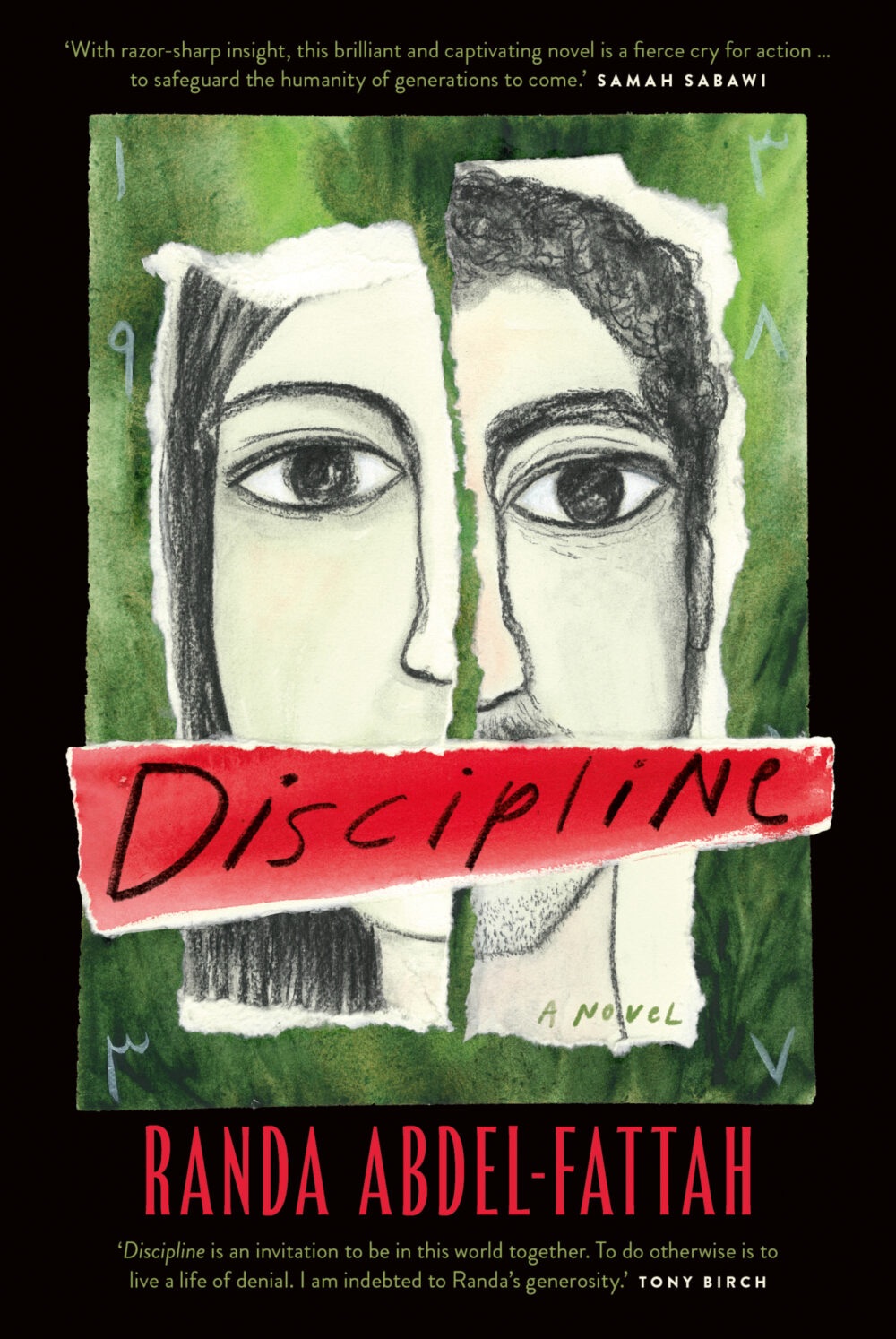
An 18-year-old Sydney high school student is charged with terrorism at the opening of this potent novel. Nabil Mostafa is arrested during a protest against a centre’s ties with Israeli weapons manufacturer Elbit. Although there are many others present, it’s Nabil who feels the brunt of public scrutiny, for wearing a green headband with numbers on it and what appears to be a Hamas flag (a proscribed terrorist organisation, Discipline’s white characters hysterically recite throughout. For a brilliant and terrifying explanation of the politics of proscription, check out Alex Shams in the Boston Review). Meanwhile Israel launches missiles at Gaza, and Palestinians in Australia desperately watch the news and wait for updates from family. So familiar is this set-up that it takes a moment to realise that Discipline is set not in the past two years, but in 2021. In doing so Abdel-Fattah powerfully reminds us that Israel’s recent genocidal violence is not an aberration but a continuation — not of five years, or 18 years (since Israel’s illegal blockade of Gaza), or 58 (since Israel’s illegal occupation of the Palestinian territories) but 76 years, since the Nakba, and Israel’s violent dispossession of Palestinians from their land. “Colonialism was not a one-time event,” thinks one of the characters, “It was a constant process, a haunting, a forever-shadow”.
We never hear from Nabil, only see the moral panic that unfolds across media and academia through the eyes of Discipline’s two protagonists, a narrative choice that contributes to the sense of claustrophobia. Hannah is a young Palestinian reporter and mother at fictional newspaper The Chronicle (“she felt the burden of representation like a medallion around her neck”); she’s the first to notice that the numbers on Nabil’s headband reference the UN resolution on the right to armed struggle for self-determination. She is charged with getting the scoop on Nabil’s Islamic school. Ashraf is a mid-career academic at the also-fictional Joseph Banks University (his superiors during a performance review: “you aren’t just a metaphor”). Recently separated from his wife who has run off to live a more traditional religious life in Oman, Ashraf is invited to join a new “social cohesion” taskforce (ironically, his wife’s decision is more radical than the youth politics he’s tasked with disarming, raising the question, why aren’t there deradicalisation programs for tradwives and sovereign citizens?). He is also the supervisor of PhD student Jamal, who is Hannah’s husband and whose mother and sister are in besieged Gaza.
Discipline unfolds with the tautness of a political thriller, yet the tension is not the machinations of power but the unbearable stress placed on Ashraf and Hannah, the discipline they face externally, but also to which they must hold themselves. We’re taken into the culture war room as they navigate the absurdities and illogicality of Australian media and academia. Are either up to the task of truth-telling about the Palestinian experience? The answer is a resounding no.
Discipline’s characters sometimes feel a bit too smooth. They mean what they say and say what they mean; they are complicated but rarely ambiguous (for example: Ashraf is transphobic because he’s a middle-class centrist, if not conservative). The novel works much more effectively in illuminating the microaggressions that make up the structural violence endured by Palestinians: Islamophobia, racial slights, double standards, conflict avoidance, the both-sides-ing, the ignorance, the editing of Hannah’s articles (“35 people dead”; “Gaza was being bombed by the passive voice”). One of Hannah’s colleagues informs her patronisingly that, “You care about your community”. “I care about the truth,” she responds. Hauled in to be reprimanded for social media posts, Jamal is asked if he supports Hamas (as are most of the other Muslim characters):
Do you mean have I provided material support? … No. Do I fundraise or advocate on their behalf as an organisation? No. Do I represent them legally or diplomatically? No. What you and everyone else disconnected from the daily reality of life as a Palestinian want to know is: “Do you, in your heart of hearts, hate Hamas the way the state has determined you must hate them?” I mean, it’s the clearest possible example of prosecuting a thought crime.
Discipline fittingly doesn’t resolve, but we know some of the outcomes for people like Hannah, Ashraf and Jamal. Journalist Antoinette Lattouf was unlawfully dismissed from the ABC over social posts about the genocide. Abdel-Fattah’s own research grant was suspended and UQP faced pressure not to publish Discipline itself. They are the most visible faces of a sustained and organised campaign to silence those who support Palestinian freedom. The novel is a call to become undisciplined. The stakes couldn’t be higher.
Gay rating: 2/5 for some minor queer characters and depictions of homophobia and transphobia.
Discover more from The Library Is Open
Subscribe to get the latest posts sent to your email.
 The Library Is Open