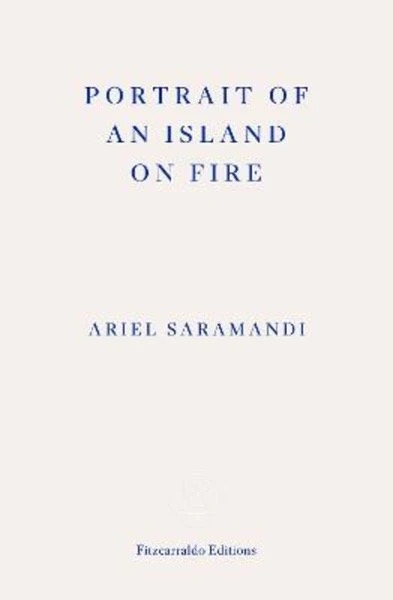
The archipelago nation of Mauritius is the subject of this collection of first-hand essays. Home to 1.2 million people, and once to the Dodo, Mauritius’ modern history begins in the era of European colonisation with Dutch settlement in the 17th Century. The British and French followed, forcibly moving enslaved Black people and then indentured workers from South Asia to work sugar cane plantations. Their descendants — Creole, Indo-Mauritian and French-Mauritian; Hindu, Muslim and Christian — make up a complicated social tapestry whose seams regularly threaten to unravel. Tracing Mauritius’ recent political history, writer Ariel Saramandi depicts a nation that, far from the idyllic tropical holiday destination promoted by its travel bureau, is in tumult.
Raised speaking English, French and Kreol, in All My Languages Saramandi explores how language exposes racialisation in Mauritian society. Despite her Creole ancestors, when she speaks the Kreol language she is treated “as if I were a woman of lofty heights seeking to be ‘of the people'”. She continues with An Education, first published in Granta, which begins with an experience at her younger brother’s school where she heard racial slurs flung casually around the classroom. The white descendants of French colonials can’t be referred to as ‘white’, Saramandi writes, “it is taken as an insult”. She describes her formative experience of racialisation and how “racism dictates our body language”:
When the whites see each other, there is an instant congregation. We walk around them. We do not say that they are in our way. We move aside when they walk in our direction. We are moved aside, through habit, in shops when a white customer walks through the door.
It was this essay that brought Saramandi (writing here under a nom de plume, but all too easily exposed in a relatively small community) notoriety and her mother’s fear that she had brought “white wrath” upon the family. She traces the material causes and results of these discrepancies. In The Inheritors she considers land stolen from Creole families and the bureacratic processes that enable such theft. Bann-la investigates the often appalling labour conditions of Bangladeshi and other workers:
the way they work isn’t so different from the way we did 100, 200 years ago. We don’t want to be reminded of what the heavily exploited body looks like.
Essays Too Much Feminism and Getting Rid Of It consider the rise of reactionary anti-feminist movements and continuing difficulties accessing terminations despite reforms in the 2010s. This “postcolonial predicament” is really “the rebranding of our old misogyny” Saramandi suggests. She writes of climate and environmental crisis, notably the 2020 Wakashio oil spill, and living through the pandemic, and uncovers their unequal impacts of both. The concluding, and longest essay, charts the approach of the 2024 elections, which put an end to a decade-long and increasingly authoritarian governing coalition, with the verve of a political thriller.
What emerges from these essays is a depiction of the legacy of colonialism, in which independence marks less a break with history than a continuation, where processes of racial and class inequality have been turbocharged by neoliberal capitalism. While unique in circumstances, Mauritius appears as a mirocosm of trends playing out in liberal democracies worldwide.
Saramandi writes with clarity whether drawing from investigation or personal experience. Both are apparent in Real Estate, in which she becomes an agent after the collapse of her freelance writing work during the pandemic. She bemusedly describes wearing acryllics (“they made me look presentable, less neurotic, but were otherwise completely fucking useless”) but reserves her ire for her rich clients:
their Olympian appetites, their absolute boredom, their propensity to accumulate capital like a disease. Rich people and their breathless ignorance, moral vapidity, immoral insouciance. It didn’t matter how supposedly left-leaning they were, how much they cared about the environment: fundamentally, rich people all behaved the same.
Saramandi takes a torch to the contradictions and inconsistencies of her home, and in doing so airs them in the light.
Gay rating: 2/5 for brief mentions of queer rights.
Discover more from The Library Is Open
Subscribe to get the latest posts sent to your email.

