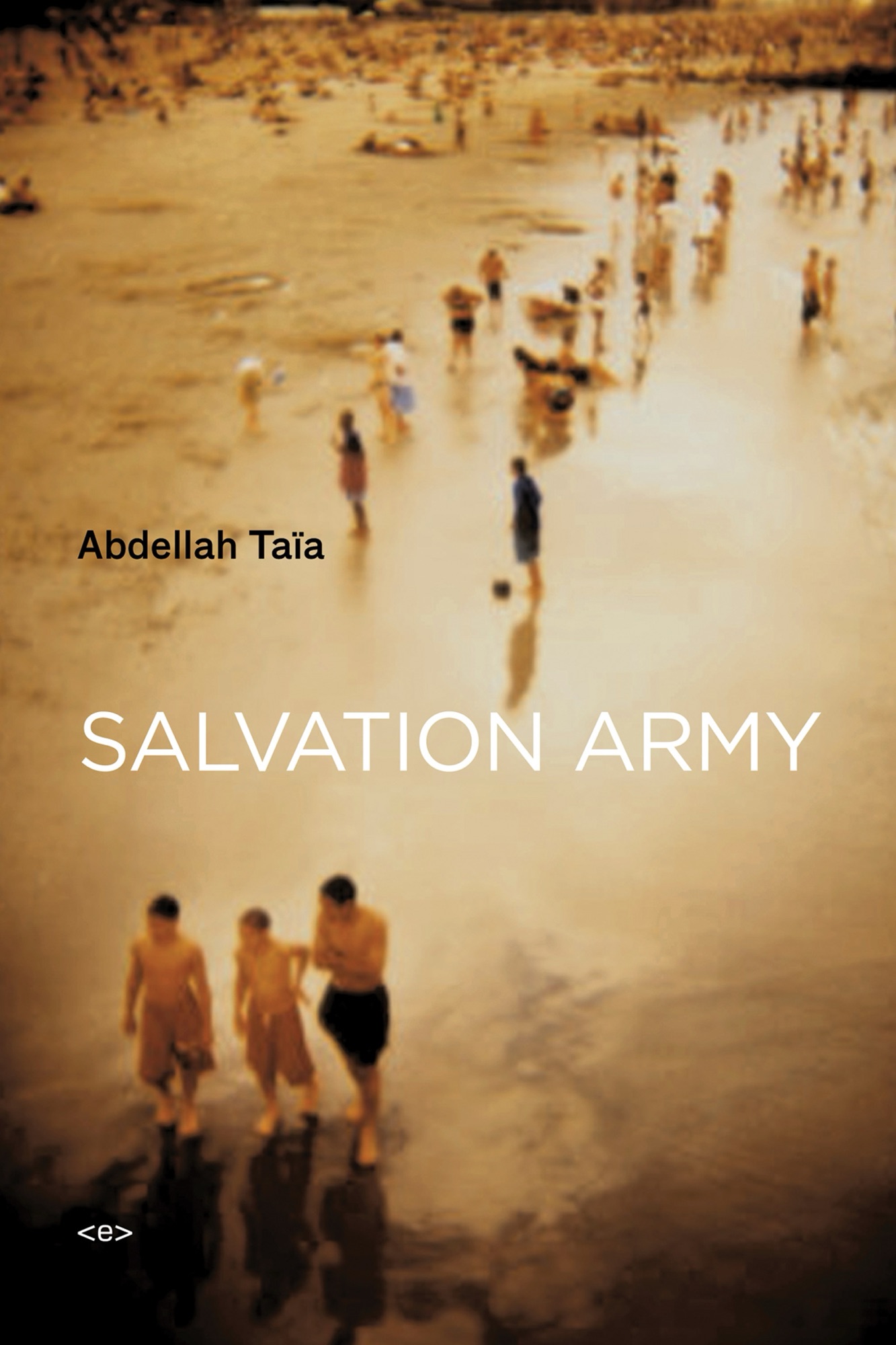
This tightly woven novel begins in a domestic setting, a family home in Salé, Morocco. Narrator Abdellah, who shares his name with the author, sleeps between his younger brother and sister. “No beds, just three benches that served as our living room couch during the day,” Abdellah says, “The essential part of my life occured in that room.” It’s from that room that Abdellah and his siblings listen to their parents having sex at least once a week in their father’s room, which Abdellah documents in some detail: the signs that it is going to happen (their father “simply … spending the evening with us”), the consequences when their father is rebuffed (once, cutting off the electricity; “no pleasure for him, no pleasure for us”), and the inevitable fight afterwards about a perceived indiscretion of their mother in the distant past. Sex, Abdellah writes, “was clearly the preferred language through which the image of the couple they formed could be expressed”.
This first of three parts deftly lays out the ideas that Abdellah Taïa explores through the rest of the novel: sex as a act that is refracted through the prisms of politics, economics, race, and gender. In the second part he expands on the love he feels for his older brother Abdelkébir, “almost a king”, on a formative trip to Tangier in the narrator’s early teens. “Like a little dog, I needed my big brother to play with, to sleep up against and sometimes to lick,” Taïa writes, managing an exquisite balance between innocence and sexual awakening that transcends the taboo it toys with.
But it is a meeting with a much older European on the beach in Tangier that sets the scene for the final part, set a decade later in Geneva, “the other shore … so far away”, where Abdellah has received a scholarship to study literature. He has been introduced to the West through a lover, Jean, but the relationship has soured and when noone shows up at the airpot to collect him, Abdellah seeks shelter at the local Salvation Army. “All of us already wanted to forget our past,” Abdellah describes of the people at the shelter:
forget last night, forget the troubles that brought us here and couldn’t be shared no matter who asked. Each one of us had his story, his secrets, his tragedies, the parents he left somewhere else, the dreams he hadn’t fulfilled yet, the love he could declare or not declare, his still raw wounds.
It’s here that the questions posed by Abdellah become potent, as he explores how sex and love are shaped by the violence of colonialism and capitalism. In the presence of a European, Abdellah is consistently mistaken for a sex worker, a legacy of North Africa’s status as an exotic destination for sex. Nowadays, says a Moroccan friend of Abdellah:
the only thing still working in Morocco was sex, sex, sex, and more sex, sex from dawn to dusk and all night too, sex everywhere and sex with everybody, even in mosques. Sex … was the country’s number one natural resource, its national treasure, its main tourist attraction.
“Freedom in the West?” Abdellah wonders, as the promise of Europe curdles, “In the land of the rich, every citizen is a policeman”. But still, he finds moments of grace, places where “men expressed their desire without becoming violent”, places where sex becomes resistance to the structures that divide and exploit. Salvation Army is an exquisite portrait of finding those places.
Gay rating: 5/5 for explicit sex, relationships, characters and themes.
Discover more from The Library Is Open
Subscribe to get the latest posts sent to your email.

