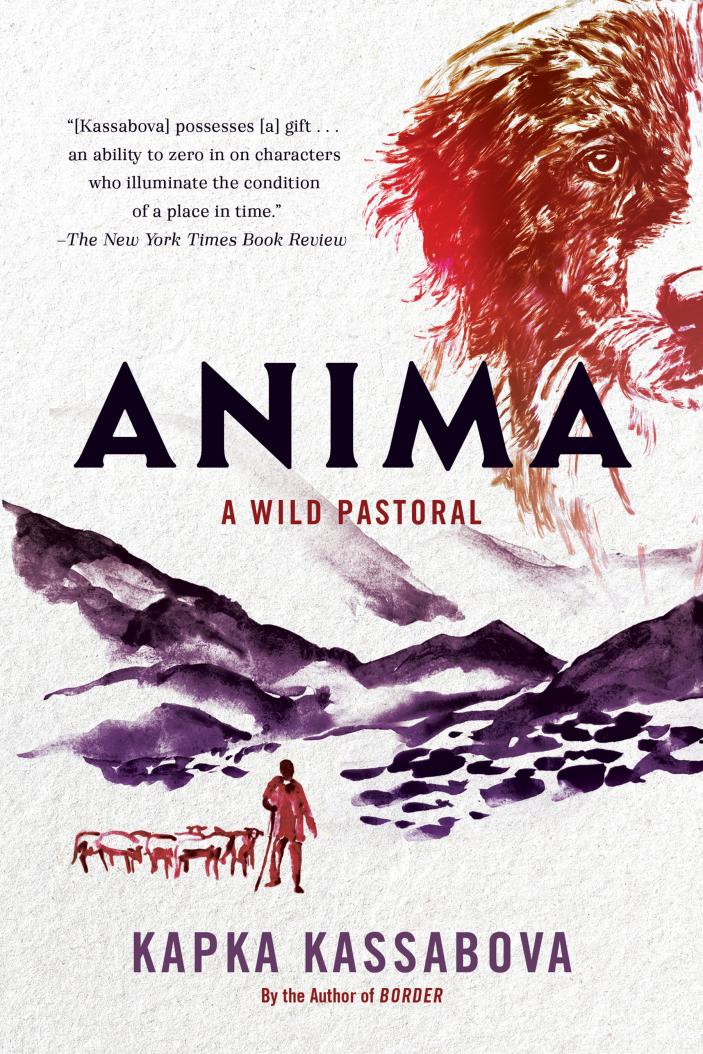
“I can’t tell the inside from the outside,” Kapka Kassabova writes near the beginning of this formiddable book. “We live inside the head of the mountain gods … a force that feels daemonic”. She is in a valley in Bulgaria in high summer, a location that could be idyllic. Instead, she finds herself consumed with anger. The seven dogs she is with are her only friends in the valley. The only other humans are drunk, one of them responsible for a 10-year-old child. “How quickly everything comes and goes,” she rages.
This is a kind of nature writing as fickle as the mountain weather, as Kassabova documents the daemonic effort to keep an endangered way of life alive. Spending time in the mountains tracking wild horses, she came across a photo of a man surrounded by goats. Tracing the photo to the village of Orelek above the Struma valley, “a ghost village kept going by a small handful of animal-lovers”, she found Kámen, one of those animal-lovers and almost singlehandedly responsible for the resurrection of rapidly vanishing breeds of pastoral animals. Karakachan sheep, dogs and people once moved with the seasons from the Aegean to the mountains, and from the valleys to the peaks. It is a portentous place, likely the home of the Thracians and Spartacus before he was enslaved by the Roman Empire, a meeting of climes and ice age relics that is home to some of the greatest levels of biodiversity in Europe.
This pastoralist system survived thousands of years until the 20th Century, when borders, collectivisation and privatisation effectively put an end to the movement of people and animals. As wildfires burn in the valley below, Kassabova joins Kámen and the shepherds and goatherds of the mountain valleys. Anima is a gripping account of this effort and the toll it exacts. Interpersonal rifts, childhood trauma and alcoholism foment in the valleys under the peaks and in the scarcity of resources and labour. Kassabova is attentive to the work of shepherding: the sheer amount of time, the waiting, and boredom.
In an extraordinary section in which Kassabova journeys into the mountains, she finds things are different from below, maybe more different than places separated by much greater distances. Sásho, the shepherd with whom she enters a passionate relationship, says that “When I stop walking, my body feels like cement”. Like Eliane Brum describing how people fall ill on encountering the Amazon rainforest, the feelings that come in the mountains are intense and painful. “There were so many stars, I couldn’t bear it,” Kassabova writes, “Maybe the dogs couldn’t bear it either. I shouted at them to stop but they didn’t. I looked at the stars, stop it! But they kept being billions and burning brightly.”
Anima, “breath, soul and life”, is clear-eyed about the promise and peril of this “pastoral utopia”. “To walk with animals on the surface of the earth outside of imperial-industrial time is to resist the system that captures bodies and soul,” she writes:
we are a monoculture … we have built a flat, boring world for ourselves on top of the original one in which we were just one component of a web that constantly moves, like plasma. This is what the shepherding life has shown me.
She articulates a vision of living again once more with nature, and all that implies. People and animals blur together in her prose, both in the present and in the past when seemingly innumerable peoples flowed across the landscape. She describes her dogs as “canine people”, the mountain valleys as “animal metropolises”, suggesting a sovereignty of animals as Emma Marris did in Wild Souls. Here, people and animals are part of the web that connects the wolves and bears that prey on the flock, the seasons, and the ancient forests and meadows that were maintained by the pastoralists before more extractive ways came along. This is a vision that sees humans as integral to nature. “Cheese,” Kassabova writes as she follows the products of the pastoral system in the valley below, “Is not complicated … but it needs someone to be here all the time”.
“Do you sometimes feel like there were people here,” the 10-year-old Constantin in the mountains wonders, “But then they left, and now the whole mountain is like an abandoned house?” If Kassabova’s account often feels apocalyptic, as she wonders aloud if pastoralism is a “middle way”, perhaps it is not a world coming to an end, but a new one struggling to be born.
Gay rating: 1/5 for shepherding being an ideal vocation for gay men.
Discover more from The Library Is Open
Subscribe to get the latest posts sent to your email.

