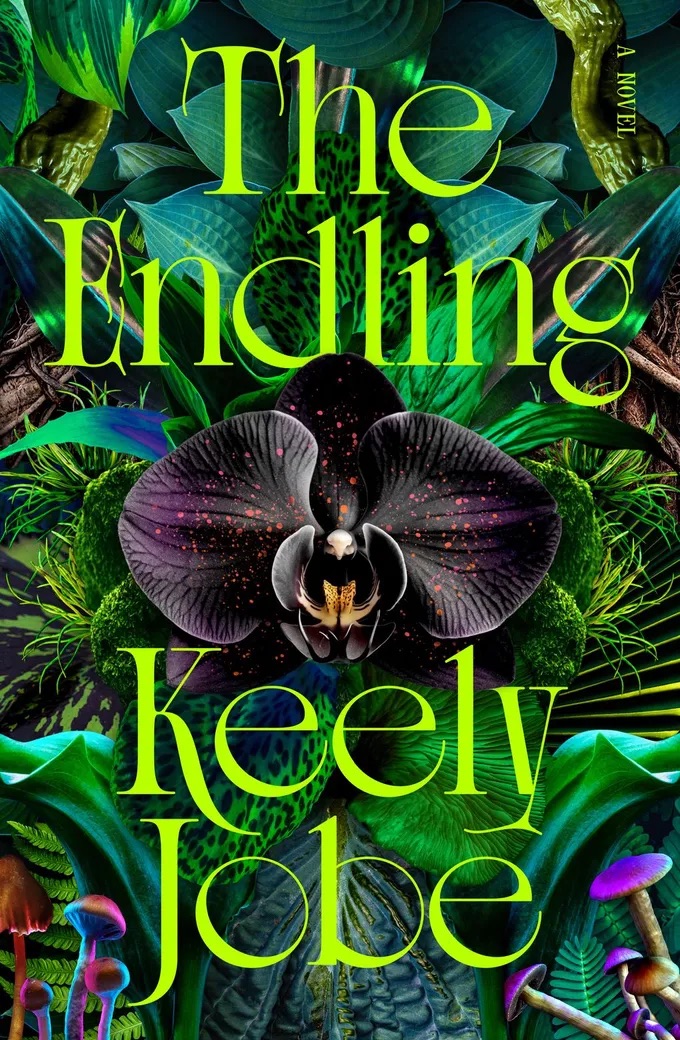
This startling novel opens with a flower. It is an orchid growing in a moist valley in the verdant subtropical forests of northern New South Wales in the 1990s. Every summer for the last 12 it has bloomed, sending out pheremonal messages to attract pollinators that will hopefully spread its seed. But it has received no response, “occasionally the same signal rebounds, a return-to-sender, and there is nothing lonelier or more deflating than that.” Dessicated by increasing heat and dryness, beseiged by deforesters, the orchid is the last of its kind, an endling. Through our introduction to this plant, Keely Jobe foregrounds the questions of existential separateness and sensuality that drive the novel.
Similarly isolated is Frank who happens upon the orchid in all its pornographic exposure. “Jeez. Buy a lady a drink first,” she thinks, “Plump and sticky and oversexed … she has seen something like it before in high school change rooms, and later in dark bars and back alleys”. Frank, 47, has lived on the mountaintop for four years with her companion dog Chicken Midnight. She has removed herself from the community of women downslope, among them Frank’s niece Mila, who have themselves left the world at large in a bid to escape the “dick-swinging, tree-murdering, rapist energy” of patriarchy. What they are fleeing specifically is sketched glancingly but it is clear that their community is a matter of survival as much as politics. Founded in the ’70s, the community is now fraying at the edges: “try finding consensus among a dozen hungry, isolated women when monogamy is forbidden and jealousy spreads like the clap,” Jobe writes. The novel twists and turns like a hungry root; surprises and revelations materialise like mushrooms. In locating her story in the real dreams and failures of women’s communities such as Amazon Acres, and the existential crises of climate change and biodiversity loss, Jobe raises the stakes on the questions of how we address ecological and patriarchal violence.
In putting up a border from a world with rules they understand only too well, the women bring themselves into contact with another with much more alien relationships. Or perhaps not alien but latent. The boundaries begin to blur. The women and the forest awaken to each other, desire “settled in [them] like dew.” “It is the place that moulds life, not the other way around,” Jobe writes of the orchid, a promise that comes to seem increasingly like a threat. Jobe renders these scenes with ecstatic, queasy sensuality. Mila recalls:
She’d spent weeks petting strange matter, poking soft things, sniffing, licking, tracing contours with her fingers and her tongue. The timid orange fuzz on the fiddleheads of ferns. The prim blue berries and pleated leaves of a native ginger. The crumpling membranes of puffball mushrooms and the deep, dark crease between coiled vines. She spent an entire afternoon naked on her knees, a hand jammed between her legs, licking eruptions of bright yellow fungi shaped like tongues while a storm crashed around her.
Western thought has been alive to erotic vegetal potential at least since the perverted taxonomist Carl Linaeus named a genus of pea flower Clitoria. Building on her writing in the excellent Breathing Space anthology, in The Endling Jobe explores the sexual suggestiveness of orchids to their labial (and phallic) end. But lurking amid the hijinks is a radical redrawing of the borders holding us from nature, and by extension from all otherness, a move towards reclaiming knowledges and understandings lost. In her mind-expanding consideration of plant experience, Zoë Schlanger describes the current precipice that botanical thought stands upon, in which our understandings of what a plant is and its agency in the world are being radically reconsidered. Plants perhaps above all are defined by their supposed lack of movement and sense; but as Frank is changed by the mountain she finds that “she can see further than she ever did”. Jobe evokes her fictional ecology and unfamiliar ways of being with precision.
The Endling lives in this precipital moment. Like Robbie Arnott, Jobe uses body horror to great effect, conjuring the wonder and grotesquery of transformation. In the forest, the women find that they are “unable to shift the immense onset of awe, equally unable to carry it”. To be unable to carry, Paul B. Preciado reminds us in their manifesto Dysphoria Mundi, is the etymology of immunity, a way of categorising those who are exempt from relational responsibility from those who aren’t (categories that achieved their apotheosis during the pandemic). In the midst of change, Frank wonders whether “adapting might also be loving”. The Endling, like the lonely orchid blooming on its branch in its wet gully, dreams of a world where no one is immune from the world or each other, offering a glimpse of something like communion.
Gay rating: 4/5 for queer characters, sex and relationships.
Discover more from The Library Is Open
Subscribe to get the latest posts sent to your email.

